

Table of Contents
- Quick Comparison: Top Safety Accessories for Urban Commuters
- 1. Best Bike Lights for Urban Commuting: See and Be Seen
- 2. Personal Safety Keychain Defense: Compact Protection That Goes Everywhere
- 3. High-Visibility Reflective Gear: Clothing, Bags, and Accessories
- 4. Bike Locks and Anti-Theft Devices: Protecting Your Ride and Your Gear
- 5. Weather Protection and All-Weather Commuting Essentials
- 6. Commuter Bike Safety Tips: Maintenance, Navigation, and Emergency Prep
- 7. Sustainability and Eco-Friendly Materials in Commuter Safety Gear
- The Bottom Line on Safety Accessories
- Frequently Asked Questions
Last Updated: September 21, 2026
Quick Comparison: Top Safety Accessories for Urban Commuters
Safety accessories for urban commuters keep you visible, protected, and prepared between home and work. This guide from Defense Divas Keychains ranks ten essentials, from bike lights to personal alarms, by what earns its place in your bag.
| Accessory | Primary Job | Price Range | Best For |
|---|---|---|---|
| Bike lights | Visibility | $20-$80 | Night riders |
| Personal safety keychain | On-foot defense | $18.95-$58.99 | Walking to transit |
| Reflective gear | Being seen | $15-$60 | Low-light commutes |
| Bike locks | Theft prevention | $30-$120 | Leaving bikes outside |
| Weather protection | Comfort and grip | $25-$90 | Rain and winter |
| Maintenance kit | Breakdowns | $25-$70 | Longer rides |
| Phone mount | Navigation | $15-$50 | Unfamiliar routes |
| First-aid kit | Emergency prep | $10-$30 | All commuters |
| Helmet | Head protection | $40-$150 | Every rider |
| Eco-friendly gear | Sustainability | Varies | Conscious buyers |
1. Best Bike Lights for Urban Commuting: See and Be Seen
The best bike lights for urban commuting are USB-rechargeable models rated 500 lumens or higher up front and 50 lumens or more at the rear. Beam pattern and mounting security matter more than brightness.

Beam Pattern and Cutoff: The Spec That Actually Matters
A raw lumen number tells you how much light the emitter produces, not where it lands. Two 800-lumen headlights can behave completely differently. The useful spec is beam shape:
- A wide, flat cutoff beam throws light down and across the road without spraying it into oncoming eyes. This is the pattern most European commuter lights use and the one that works best in traffic.
- A spot beam concentrates light in a narrow cone. It is fine for unlit paths but creates a hot dot that drivers misread as a motorcycle or a glare source.
- A flood beam spreads light evenly but wastes output upward and sideways, which is why cheap lights feel dim even at high lumens.
Mounting: Where Lights Fail in Practice
The mount is the part that breaks, rattles, or gets stolen. Three patterns dominate:
- Silicone strap mounts stretch over bars and seat posts. They are cheap, tool-free, and easy to pocket, but they slip on rough pavement and stretch out over a season.
- Bracket-and-bolt mounts clamp with a hex bolt. They stay put and resist vibration, but they need a tool to remove, which slows you down at the rack.
- Quick-release mounts use a lever or a quarter-turn interface so the light pops off in one motion. This is the best compromise for a commuter who parks in public.
Runtime, Charging, and Cold Weather
Runtime claims are usually measured on the lowest steady mode; on flashing or high, expect roughly half the advertised hours. Charge on a schedule rather than when the light dies, and bring the light inside at night in cold weather, when battery capacity drops. USB-C is the practical standard, and a visible low-battery indicator beats one that just dims.
What the Rules Require
Most states require a white front light and a red rear reflector or light after dark, and some add a red rear light requirement. Specifics vary by state and municipality, so check local rules. A front light visible from a reasonable distance plus a red rear light or reflector is the common baseline.
2. Personal Safety Keychain Defense: Compact Protection That Goes Everywhere
Personal safety keychain defense means carrying compact, legal safety tools on your keys or bag so protection is always within reach. The category covers personal alarms, mini flashlights, whistles, and seatbelt cutters.
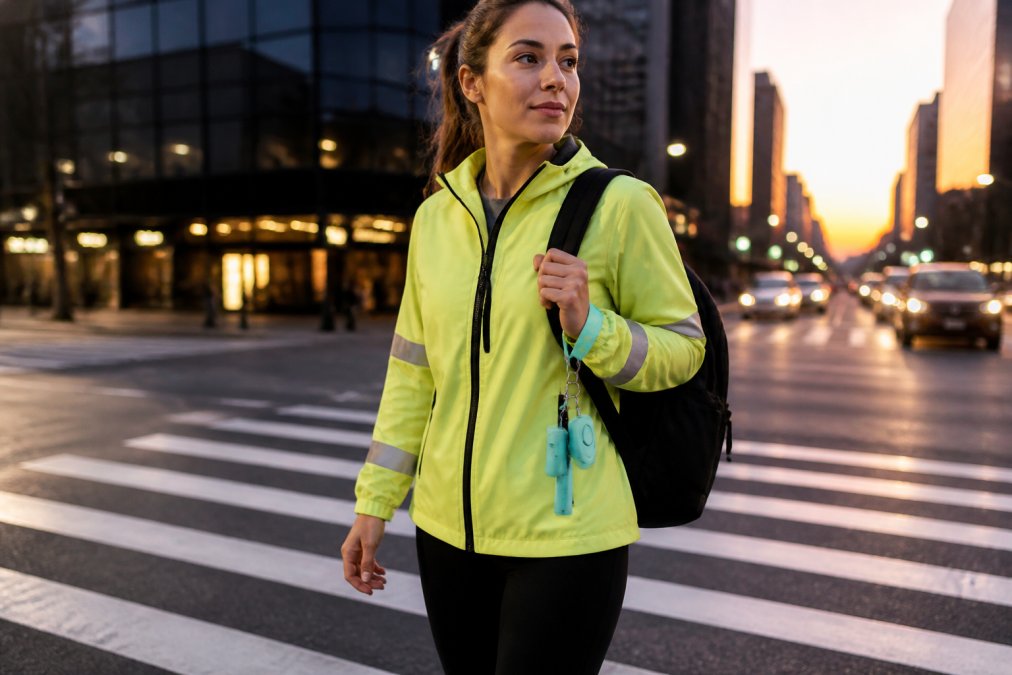
3. High-Visibility Reflective Gear: Clothing, Bags, and Accessories
High-visibility reflective gear uses retroreflective materials that bounce light back to its source, returning it directly to the driver's eye rather than scattering it.
- Reflective ankle bands: cheap, packable, and they move, which catches the eye
- A reflective vest or sash over any jacket
- A backpack with reflective piping or a clip-on reflective tag
- Reflective tape added to pedals and frame tubes
4. Bike Locks and Anti-Theft Devices: Protecting Your Ride and Your Gear
The best bike lock for urban commuting is a U-lock with a hardened steel shackle, paired with a secondary cable for wheels and accessories. No lock stops a determined thief with an angle grinder, so the goal is to be harder to steal than the bike next to yours.
| Lock Type | Security Level | Weight | Best For |
|---|---|---|---|
| U-lock | High | Heavy | Frame to rack |
| Chain lock | High | Heaviest | Leaving at a fixed spot |
| Folding lock | Medium | Moderate | Mixed parking |
| Cable lock | Low | Light | Secondary wheel security |
5. Weather Protection and All-Weather Commuting Essentials
Weather protection for commuters means fenders, a water-resistant jacket, and a bag that keeps electronics dry. Rain changes how you ride, and the right gear keeps you on the bike instead of back in the car.
Fenders: The Highest-Value Upgrade
Fenders, also called mudguards, are the single best upgrade for wet commuting, keeping road spray off your back and drivetrain. Full-coverage fenders beat clip-on guards if your bike has the mounts.
Cold-Weather Specifics: Hands, Feet, and Face
Winter commuting fails at the extremities first. Priorities shift:
- Gloves: Windproof, water-resistant shells with enough dexterity to work brake levers. Lobster-claw gloves share heat between digits, and bar mitts (pogies) mount over the bars so you can wear thinner gloves underneath.
- Feet: Waterproof overshoes or winter cycling boots keep feet dry; neoprene covers work in rain, insulated boots in cold, and chemical toe warmers are a cheap backup.
- Face and eyes: A balaclava or neck gaiter covers the gap between helmet and collar, and clear or yellow lenses cut wind-driven tears in low light.
- Tires: Studded tires help on ice but are noisy and slow on dry pavement; for slush and wet leaves, a wider tire at lower pressure grips better than a narrow one at high pressure.
Wet-Weather Visibility: The Part Most Guides Skip
Rain and fog cut visibility in both directions. Reflective gear still works when wet, but drivers have less time to react. Run lights on a steady or slow-pulse mode in rain, since a fast strobe scatters in water droplets, and add reflective material low on the body, ankles and pedals, because the motion catches a driver's eye even through spray.
Multi-Modal Commuting: Bikes on Trains and Buses
If your commute combines riding with transit, weather gear must survive a wet platform and a crowded car:
-
A folding pedal reduces the bike's footprint on a rack or in a vestibule.
-
A carry strap or frame bag with a shoulder strap lets you lift the bike one-handed on stairs and escalators.
-
A cover or lightweight tarp keeps a wet bike from dripping on other passengers and on you.
-
A roll-top or dry bag for electronics matters more on transit, where a soaked backpack sits against your back for the whole ride.
-
Water-resistant jacket with reflective accents
-
Full-coverage fenders with a rear mudflap
-
Waterproof panniers or a roll-top backpack
-
Sealed lights rated for rain
-
Windproof gloves and waterproof overshoes
-
A packable shell layer and a dry bag for electronics
6. Commuter Bike Safety Tips: Maintenance, Navigation, and Emergency Prep
Commuter bike safety tips come down to three habits: keep the bike maintained, know your route, and carry what fixes a breakdown. Most stranded commuters are stopped by a flat tire or slipped chain, not a crash.
- A multi-tool with the hex keys your bike uses
- Tire levers and a spare tube or patch kit
- A portable pump rated for your valve type
- Chain lube for a dry or squeaky drivetrain
- A first-aid kit with bandages and antiseptic wipes
7. Sustainability and Eco-Friendly Materials in Commuter Safety Gear
Eco-friendly commuter gear means choosing durable, repairable, recyclable materials over disposable ones. The most sustainable accessory is the one you keep for years.
The Bottom Line on Safety Accessories
Every commuter builds their kit differently, but the priorities rarely change: be seen, be hard to steal from, and be ready for a flat. Start with lights and a lock, add reflective gear and weather protection, then fill in the rest as your route teaches you what you need.
Federal Trade Commission consumer safety guidance
Frequently Asked Questions
What are the most important safety accessories for urban commuters?
The essentials include bike lights with at least 500 lumens for visibility, a sturdy U-lock or cable lock, a personal safety keychain defense set with an alarm and flashlight, reflective gear, and a basic repair kit with tire levers and a multi-tool. Weather protection like fenders and a water-resistant bag also matter for year-round commuting. Prioritize visibility and locking first, then add personal safety tools and emergency prep items based on your route and climate.
Are personal alarms effective for urban commuters?
Personal alarms are designed to attract attention during an emergency by emitting a loud sound, which can deter an attacker and alert nearby people. They work best as part of a layered safety approach alongside situational awareness and other tools. The Defense Divas Aqua Defense Safety Keychain Set includes a personal safety alarm paired with a mini flashlight and pepper spray holder for convenient everyday carry.
How can I increase my visibility while commuting in traffic?
Use a combination of active and passive visibility gear. A front headlight with at least 500 lumens and a rear tail light with flashing modes make you visible to drivers. Add reflective materials on your jacket, backpack, and pedals. High-visibility colors like neon yellow or orange help during daylight, while reflective strips and blinking lights are critical at night. Position lights so they are not blocked by bags or clothing.
What safety gear is legally required for cyclists in most states?
Laws vary by state and municipality. Many states require a front white light and a rear red reflector or light for night riding, and some require a bell or horn. Helmet laws differ: some states mandate helmets for riders under 18, while others have no statewide requirement. Always check your local regulations. For personal safety items like pepper spray, restrictions also vary by state and city, so verify before purchasing.
What should I look for in a high-visibility commuter backpack?
Look for reflective strips on the front, sides, and straps, plus a loop for attaching a rear light. Water-resistant or waterproof fabric protects your gear in rain. A padded laptop sleeve and ergonomic straps improve comfort on longer rides. Some backpacks include a helmet holder or U-lock attachment. Bright colors like neon yellow or orange increase daytime visibility. Test the fit with a loaded pack before commuting to ensure it stays stable while riding.