

Table of Contents
- 1. Plan Ahead and Share Your Itinerary
- 2. How to Keep Hotel Rooms Secure
- 3. Master Situational Awareness in Public Spaces
- 4. Personal Safety Tools for Travelers
- 5. Solo Travel Safety Tips for Women
- 6. Trust Your Intuition and Stay Connected
- Conclusion
Last Updated: August 21, 2026
1. Plan Ahead and Share Your Itinerary
When you travel alone, your itinerary becomes your safety net. Before you leave, write down your flight times, hotel addresses, car rental confirmations, and daily plans. Send this to at least two trusted people, a family member, close friend, or partner who will actually check their email and respond if you miss a scheduled check-in.
Include the names and phone numbers of your accommodations, local emergency numbers for your destination, airline contact information, and car details if renting. Share your route between destinations. This level of detail gives someone a concrete starting point if they need to contact authorities.
Check in at regular intervals, daily if stationary, or upon arrival at each new destination if moving around. A simple text saying "arrived safely" takes 30 seconds and confirms you're on track. Establish in advance what happens if you miss a check-in: Do they wait two hours and call? Do they contact local police? Clarity prevents confusion if something goes wrong.
Consider using a location-sharing app like Google Maps or Apple's Find My feature for real-time visibility without requiring manual check-ins. You control who sees your location and can turn it off anytime.
2. How to Keep Hotel Rooms Secure
Hotel security starts at check-in. Test the locks, deadbolt, chain, and door handle immediately. If any feel loose or broken, request a different room without hesitation.
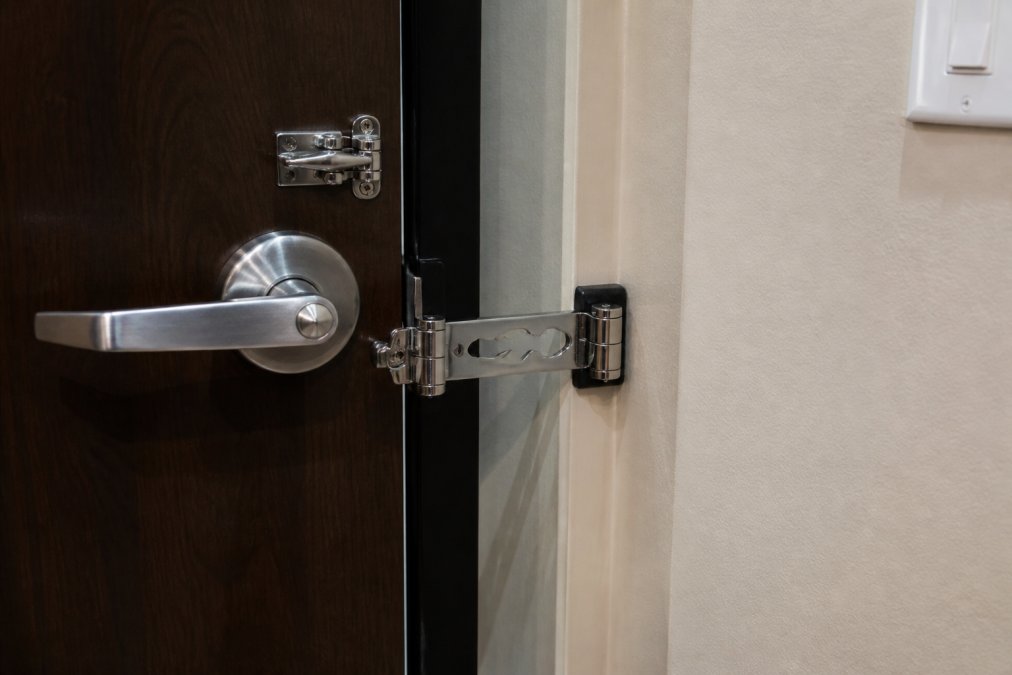
Reinforce Your Door
Standard hotel locks prioritize convenience over security. A portable door lock like the Addalock Portable Door Lock significantly improves protection. It wedges into the door frame and prevents opening even with a keycard. Made from durable chrome-plated carbon steel, it installs in seconds without tools and works on inward-opening hinged doors, the vast majority of hotel rooms.
Install it every time you're in your room, whether overnight or stepping out briefly. For sliding glass balcony doors, wedge a sturdy object (door wedge, rolled towel, or shoe) into the track to prevent sliding open.
Don't rely on the "Do Not Disturb" sign alone. Housekeeping will still enter if the room appears empty, and staff have master keys. A reinforced door means you control access.
Secure Your Valuables
Store your passport, cash, credit cards, and electronics in a portable safe like the Master Lock Portable Personal Safe (5900D). It's compact, water-resistant, has a customizable combination lock, and includes a cable to secure it to a fixed object. The shock-absorbing foam protects valuables, and it weighs just enough to be portable yet substantial enough to deter casual theft.
Keep valuables off visible surfaces. Spread your money across multiple locations: wallet, safe, money belt, or hidden pocket. If one stash is stolen, you retain resources.
Ask the front desk for a keycard that doesn't display your room number, or cover it with tape or a holder. Don't advertise your room if the key is lost or stolen.
3. Master Situational Awareness in Public Spaces
Situational awareness is your ability to notice what's happening around you and recognize when something feels off. It's the foundation of personal safety in public spaces and doesn't mean paranoia, it means being present, observing patterns, and trusting your instincts when something breaks the pattern.
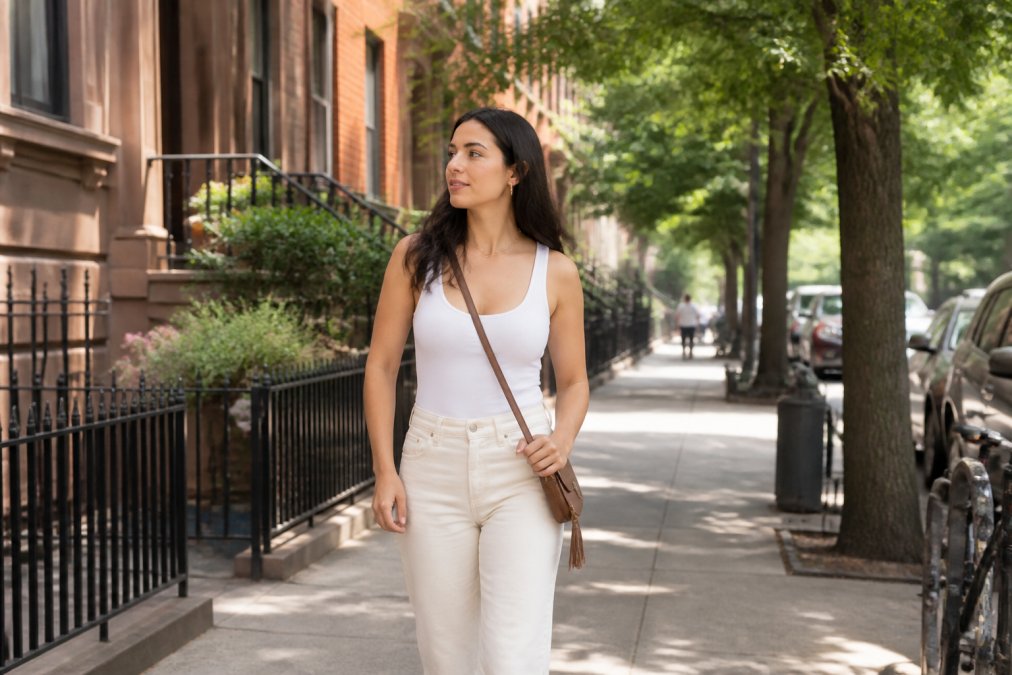
When you arrive at a new destination, spend the first 30 minutes observing (dhs.gov). Note which streets are populated, identify well-lit areas versus dark corners, and establish what "normal" looks like at different times of day. This baseline makes abnormalities obvious.
Stay in populated areas, especially at night. Crowded streets, busy restaurants, and public transportation hubs are safer than isolated areas. Criminals prefer targets they can isolate. If using rideshare services, share your trip details with a friend in real-time using the app's built-in feature.
Avoid obvious signs of being a solo traveler. Don't walk with your nose in a map or phone looking lost. Don't wear expensive jewelry, flash cash, or carry a camera around your neck, these are pickpocketing targets. Dress for the local environment and blend in rather than standing out as a tourist.
Keep your phone charged and know where the nearest police station or embassy is located. Research the local emergency number before arrival. In the United States it's 911, but international destinations vary. Store it in your phone with a note like "EMERGENCY."
4. Personal Safety Tools for Travelers
The right tools amplify your ability to respond if something goes wrong. They're valuable backup systems that give you options and confidence.
Keychain Defense Tools
A quality defense keychain is discreet, legal to carry, and immediately accessible. Defense Divas Keychains offers stylish keychain options that combine personal safety with aesthetic appeal, exactly what solo travelers need. Unlike bulky self-defense tools, a keychain defense item stays with you because it's fashionable enough to carry daily.
The MUNIO Self Defense Keychain is made from durable ABS thermoplastic, legal in all states, and TSA-compliant for air travel (tsa.gov). This matters because one of the biggest frustrations for solo travelers is figuring out which safety tools can actually make it through airport security. The MUNIO is explicitly approved.
A personal safety alarm like She's Birdie produces a 130-decibel siren and flashing strobe light (peer-reviewed research). Pull the pin to activate. In a threatening situation, the goal is to draw attention and create chaos that gives you time to escape. It's non-violent, non-lethal, and works globally.
Keep your chosen tool where you can access it in seconds. Practice drawing or activating it so your muscle memory works even if stressed or scared.
Digital Safety and Connectivity
Digital security affects your physical safety. On public Wi-Fi at coffee shops and airports, your data is vulnerable. A VPN like NordVPN encrypts your internet traffic and hides your IP address, protecting login credentials and personal information from interception on unsecured networks.
Be mindful of what you post on social media while traveling. Don't post your location in real-time or broadcast that your home is empty. Avoid checking in at your hotel or sharing photos revealing your room number or exact location.
Use strong, unique passwords for travel-related accounts and enable two-factor authentication whenever possible. If your email or booking account is compromised, someone could access your reservations or change your flight.
Keep your phone backed up and know how to remotely wipe it if stolen. Both iOS and Android offer remote lock and erase features. The GeoSure App provides real-time safety scores for neighborhoods and cities worldwide, with specific scores for women's safety and LGBTQ+ safety.
Consider travel insurance that includes emergency assistance. Travel Guard offers 24/7 emergency support, medical expense coverage, and assistance coordinating help if something goes wrong.
5. Solo Travel Safety Tips for Women
Women face specific safety concerns when traveling alone. The Spher Safety App is designed specifically for women travelers. It combines live location sharing with trusted contacts, SOS alerts that send your location and audio recording to selected people, and access to women-first communities where travelers share safety insights. The app works globally and is free.
When booking accommodations, read reviews carefully and look for safety comments. Stay in well-established hotels or vetted Airbnbs in populated neighborhoods. Choose rooms that don't advertise your gender; many hotels offer female-only dorms or lower-floor rooms if you ask.
Trust your intuition about people you meet. Solo travel often involves meeting new people, but maintain boundaries. Don't feel obligated to share personal details like where you're staying, your full name, or itinerary with people you just met. If someone makes you uncomfortable, distance yourself or leave.
Avoid excessive alcohol in unfamiliar places where you don't know social norms or how your body will respond. Alcohol impairs judgment and situational awareness. If you do drink, do it in groups or with people you trust, and keep track of your drink.
Dress appropriately for local culture. Research what women typically wear in your destination. Dressing like a local makes you less of a target and shows respect for the culture.
6. Trust Your Intuition and Stay Connected
Your gut feeling is data. It's your brain processing micro-signals, a person's tone, body language, situation energy, faster than your conscious mind can articulate. When something feels wrong, it probably is.
Intuition isn't about fearing everything. It's about noticing when something breaks the pattern. If everyone on the street walks calmly and one person watches you intently, that's a pattern break. If a taxi driver takes an unusual route, that's a pattern break. Small inconsistencies accumulate into a feeling that something is off.
When your intuition triggers, you have options: leave the situation, move to a more populated area, call someone you trust, or ask for help. You don't need permission or a specific threat to do any of these things.
Stay connected to people who know your plans. Regular check-ins aren't just for emergencies, they're a comfort for you and a safety net for them. Knowing someone expects to hear from you creates accountability.
Before you travel, research local emergency protocols and contact information. Know the phone number for police, hospitals, and your embassy or consulate. Save these in your phone and write them down on paper as backup.
Create an emergency plan with your trusted contacts. What happens if you don't check in? Who do they contact? The plan doesn't need to be complicated, just clear so everyone knows what to do.
Solo travel is one of the most rewarding experiences you can have. The freedom to move on your own schedule, make your own decisions, and discover places without compromise is incredible. That freedom doesn't require you to abandon safety. By planning ahead, staying aware, using the right tools, and trusting your instincts, you create the conditions for safe, confident solo travel.
Defense Divas Keychains understands that solo travelers need safety tools that don't compromise style. Their keychain defense options combine Western-inspired aesthetic design with genuine protective functionality, giving you something you'll actually want to carry every day. With preorder exclusives and personalized service, Defense Divas Keychains makes it easy to find a tool that matches your travel style while keeping you prepared. Add a stylish defense keychain to your travel kit and travel with confidence.
| Safety Strategy | Primary Benefit | Best When | Implementation |
|---|---|---|---|
| Shared itinerary | Someone knows where you are | Traveling to unfamiliar areas | Share with 2+ trusted contacts, daily check-ins |
| Reinforced door lock | Prevents unauthorized room entry | Staying in hotels or Airbnbs | Use portable lock every time you're in room |
| Situational awareness | Early warning system | Moving through public spaces | Observe patterns, trust intuition, stay in populated areas |
| Defense keychain | Immediate response tool | Facing direct threat | Keep accessible, practice activation |
| Digital security (VPN) | Protects data on public networks | Using airport/café Wi-Fi | Enable before connecting to public networks |
| Travel insurance | Emergency support and medical coverage | Any solo trip | Purchase before departure, save emergency number |
Frequently Asked Questions
What are the most important personal safety tools for travelers?
The essentials depend on your trip type, but key items include a portable door lock for hotel security, a personal safety alarm (like She's Birdie with its 130dB siren), a discreet keychain defense tool, and a VPN for protecting your digital footprint on public Wi-Fi. Travel insurance and a satellite communicator like Garmin inReach Mini 2 add extra protection for remote travel. Defense Divas Keychains offers stylish options that combine safety with fashion, so you'll actually carry them.
How do I keep my hotel room secure when traveling alone?
Start by using the existing deadbolt and chain lock. Add a portable door lock like Addalock (installs in seconds) for extra reinforcement on inward-opening doors. Keep valuables in a portable safe with a cable lock, and store important documents separately. Don't advertise that you're traveling alone; keep your room key secure and never leave it unattended at the front desk. Check that windows lock properly, and use the peephole before opening the door.
Why is situational awareness so important for solo travelers?
Situational awareness means noticing your surroundings, identifying exits, and recognizing unusual behavior before it becomes a threat. Solo travelers are sometimes targeted because they appear less aware or distracted. By staying alert in public spaces, avoiding well-lit areas at night, trusting your intuition about people and places, and keeping your digital footprint minimal, you reduce your risk significantly. Apps like GeoSure help you assess neighborhood safety before you go, so you can plan routes through populated areas.
Is a personal safety alarm actually effective, or is it just a confidence thing?
Personal safety alarms like She's Birdie work through deterrence and attention-drawing, not physical incapacitation. A 130dB siren (as loud as a jet engine) combined with a flashing strobe light startles attackers and alerts nearby people to call for help. They're most effective when used early and in populated areas. They won't stop a determined attacker, but they significantly increase your chances of escaping by making you a harder target and drawing emergency assistance. Pairing an alarm with other tools like a keychain defense device and strong situational awareness creates layered protection.