

Table of Contents
- Why Bulky Self-Defense Tools Don't Work for Everyone
- Compact Keychain Defense Options
- Jewelry-Based Defense: Rings and Wearables
- Discreet Self Defense Weapons That Don't Look Like Tools
- Best Practices for Personal Defense Awareness
- Self Defense Kit Essentials and Legal Considerations
- How to Choose the Right Compact Alternative
- Conclusion
Last Updated: August 19, 2026
Why Bulky Self-Defense Tools Don't Work for Everyone
Most people think self-defense means carrying something large and obvious, a bulky pepper spray canister, a heavy flashlight, or a knife that screams "I'm armed." But that approach has a fundamental flaw: if you won't carry it, it can't protect you.
Effective personal protection isn't about size or intimidation factor; it's about what you'll actually have on you when you need it. Bulky tools create friction, they don't fit in small purses, catch on clothing, and draw attention. So people leave them behind, trading protection for convenience. The most effective self-defense tool is the one you actually carry. Defense Divas Keychains has spent years designing solutions that integrate seamlessly into everyday life instead of standing out like tactical accessories.
Alternatives exist across multiple categories: compact keychains, jewelry-based options, and discreet everyday items that double as defense tools. Each solves a different problem, some prioritize distance from a threat, others emphasize concealment, many offer psychological deterrence without physical contact. Choosing the right alternative isn't about finding the most powerful option; it's about finding the option that becomes part of your routine instead of a burden you resent carrying.
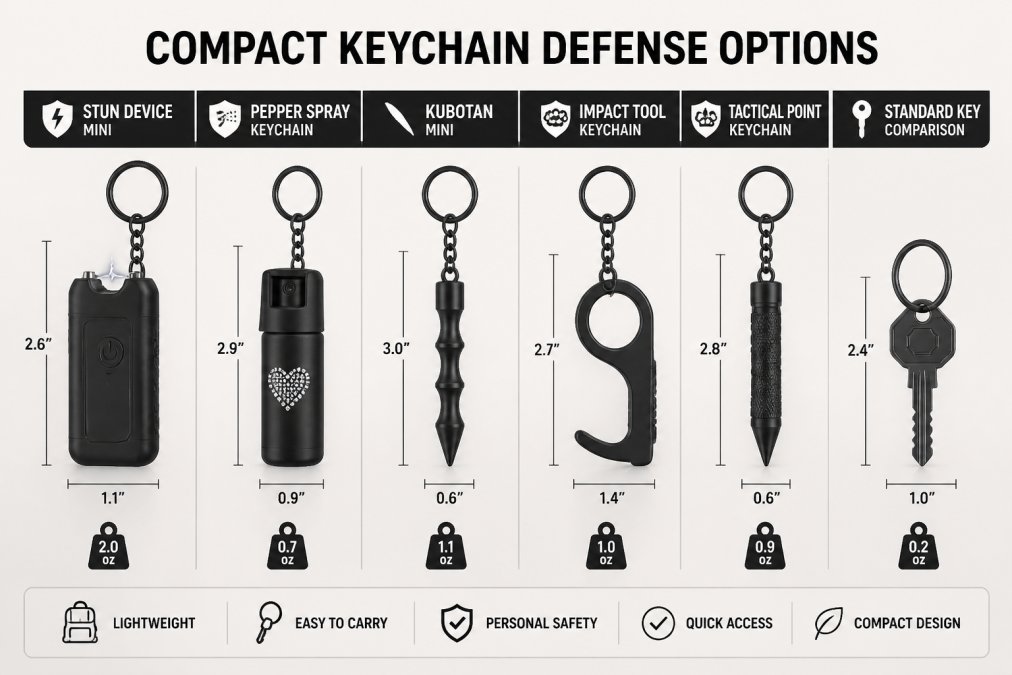
Compact Keychain Defense Options
Keychain-based tools solve the fundamental carry problem by attaching to keys you already carry every day, making them impossible to forget. The category splits into two main approaches: chemical irritants and electrical devices, often sold together for redundancy.
Stun Guns and Pepper Spray Sets
The combination of stun and spray addresses different threat scenarios. Pepper spray creates distance from up to 16 feet away, giving you space to escape. Stun guns require close proximity but offer electrical incapacitation without relying on wind conditions or aim accuracy.
Combined sets offer psychological advantage, you have options if one approach doesn't work in a specific situation. However, mastering both tools requires practice; stun guns and pepper spray have different deployment mechanics and effective ranges. Pepper spray effectiveness depends on proper aim and wind direction, while stun guns require direct contact and work best on exposed skin. Neither tool works through heavy clothing, and both need activation speed and presence of mind during a crisis.
Impact Tools and Kubatons
Impact tools use kinetic energy to create pain or incapacitation through striking. Kubatons are small metal or plastic cylinders designed for striking pressure points or creating distance. They're legal in all 50 states and require no licensing or registration.
MUNIO Kubotan Personal Safety Keychain offers an ergonomic design with two defensive points for striking and pressure-point application. Made in the USA, the tool requires no batteries or refills and works in any weather. However, effective use requires basic training on target areas and striking technique. A keychain kubaton is a force multiplier for someone with training, not a substitute for it.
Concealed Blade Keychains
Concealed blade keychains occupy a legal gray area that varies dramatically by jurisdiction. Some states prohibit them entirely; others allow them with restrictions on blade length or deployment method. Before carrying any blade, research local ordinances, a tool that's illegal where you live becomes a liability instead of protection. When legal, the advantage is immediate accessibility; the disadvantage is that it requires close-quarters engagement and carries legal liability if used.
Jewelry-Based Defense: Rings and Wearables
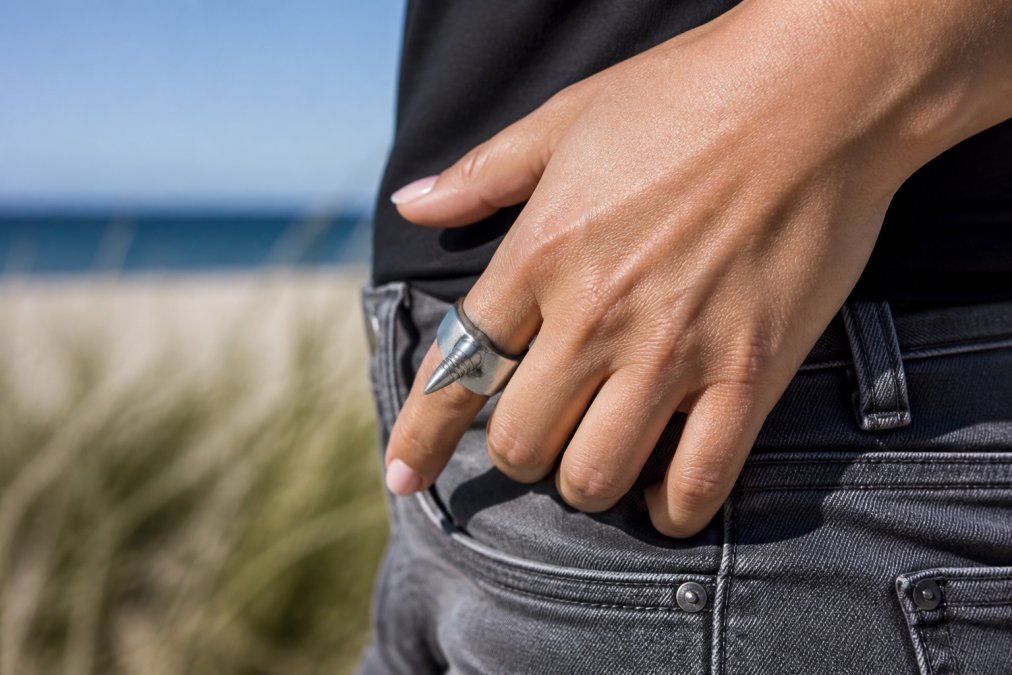
Jewelry-based tools solve the concealment problem completely. They're worn openly as fashion accessories, requiring no explanation or concealment. A self-defense ring looks like a statement piece, not a weapon.
The Knockout Safety TKO Ring comes in sterling silver and lucite options, handmade to order in the USA. The design incorporates a pointed protrusion deployed by turning the ring on the finger. Pricing ranges from $40 for basic designs to $1,300 for premium versions.
The advantage is that a ring is always on your finger, there's no way to forget it. It requires no activation time beyond turning it and works in any environment or weather. The limitation is that ring-based tools require direct contact and don't create distance. They're most effective as a surprise element; once that surprise is gone, effectiveness drops significantly.
The Go Guarded Ring takes a different approach with a serrated edge made from glass-reinforced nylon and thermoplastic elastomer, designed for runners and people in motion. Both ring designs require anatomical knowledge to be truly effective, striking pressure points during a crisis requires understanding where those points are and how to reach them.
Discreet Self Defense Weapons That Don't Look Like Tools
This category represents a strategic shift: everyday items that happen to have defensive applications. A tactical pen is still a pen. A personal alarm is still an alarm. But each has secondary functions that serve personal protection.
Tactical Pens and Multi-Tools
The Atomic Bear Stealth Pen Pro is constructed from aircraft-grade aluminum with a tungsten carbide glass breaker. It functions as a writing instrument, emergency tool, and impact weapon with a textured grip for control.
The appeal is versatility and legitimacy, you can carry it anywhere a pen is allowed. No one questions why you have a pen. The tungsten carbide glass breaker is useful for vehicle escape in emergencies, not just self-defense. Effectiveness as a self-defense tool depends on training; a pen can be used for striking vulnerable areas or creating distance, but this requires knowledge of targets and confidence to act decisively.
Personal Alarms and Sound Deterrents
Personal alarms operate on a different principle than contact-based tools. They don't incapacitate an attacker; they create noise and light to disorient, attract attention, and trigger psychological response.
The Kosin Safe Sound Personal Alarm produces a 140-decibel siren with LED flashlight and pull-pin activation. She's Birdie Personal Safety Alarm offers a 130-decibel siren with flashing strobe light in multiple colors.
Sound-based deterrence works through psychological impact and external response. A loud alarm startles an attacker and signals to others that something is wrong. This approach relies on bystander intervention or the attacker's decision to flee. In isolated areas with no one nearby, a personal alarm is less effective than an incapacitating tool. The advantage is universal legality, personal alarms are legal in all 50 states, require no training, and create no legal liability for use.
| Tool Category | Best For | Activation Speed | Distance Created | Legal Status |
|---|---|---|---|---|
| Pepper spray & stun sets | Distance + backup option | 2-3 seconds | Up to 16 feet | Legal in most states |
| Impact tools (kubatons) | Trained users, all-weather | Immediate | Close range | Legal in all 50 states |
| Concealed blades | Immediate access, close range | Instant | Close contact | Varies by state |
| Self-defense rings | Always-on, discreet | Immediate | Close contact | Legal in most states |
| Tactical pens | Multi-purpose, legitimate carry | 1-2 seconds | Close range | Legal everywhere |
| Personal alarms | Attention-getting, no training | 1 second | Psychological | Legal in all 50 states |
Best Practices for Personal Defense Awareness
Choosing the right tool is secondary to understanding threat assessment and de-escalation. Situational awareness means noticing your environment: who's around you, what exits exist, what feels wrong. Most threats include warning signs, someone watching you, someone approaching too quickly, someone violating normal social distance. Recognizing these signs gives you time to create distance or prepare a response.
De-escalation uses communication and body language to reduce tension. A calm tone, non-threatening posture, and willingness to comply with reasonable demands often prevent physical confrontation entirely.
The use of force continuum is a legal and ethical framework progressing from presence through verbal commands, physical restraint, and finally to force. Using a tool appropriate to the threat level is legally and ethically sound. Personal defense awareness also means understanding your own limitations. If you're not trained in hand-to-hand combat, don't rely on close-contact tools. Honest self-assessment prevents you from carrying tools you won't actually use or can't use effectively.
Self Defense Kit Essentials and Legal Considerations
A functional self-defense kit combines tools with different functions and ranges. The principle is redundancy, if one approach doesn't work, you have alternatives.
Legal considerations vary dramatically by location. Pepper spray is restricted or prohibited in some states and cities. Blade length limits differ by jurisdiction. Before purchasing or carrying any tool, research your local ordinances. An illegal tool becomes a liability instead of protection.
Federal law prohibits certain items from aircraft. TSA rules prohibit pepper spray, stun guns, and most blades in carry-on luggage. If you travel, verify what's permitted before packing.
Maintenance matters for chemical tools. Pepper spray has a shelf life of 3-5 years before effectiveness degrades. Stun guns need periodic charging. Personal alarms need battery replacement according to manufacturer specifications.
How to Choose the Right Compact Alternative
Start with threat assessment. What are you actually protecting against? Different threats call for different tools. Distance-creating tools like pepper spray are most effective against strangers in public spaces. Close-contact tools are useful when already engaged. Personal alarms work best when bystanders are nearby.
Consider your lifestyle and carry habits. A tool you won't carry is useless. If you carry a small purse, a large flashlight won't work. If you don't like wearing rings, a self-defense ring won't help. Choose tools that integrate into your actual daily routine.
Evaluate your training and comfort level. Some tools require significant training; others work with minimal instruction. Match tools to your willingness to train and comfort with potential consequences.
Test tools before committing to them. Hold a stun gun to understand its weight and activation mechanism. Practice deploying pepper spray in a safe environment. Wear a self-defense ring for a day to see if it feels natural.
Price matters, but it's not the only factor. A cheap tool that breaks when you need it is worse than no tool at all. A more expensive option that's durable and reliable is a better investment.
Choosing an alternative to bulky self defense tools isn't about settling for less protection. It's about choosing protection that actually fits your life. The right tool is the one you carry every day, understand how to use, and have legal permission to possess. Defense Divas Keychains offers stylish, functional options that integrate into daily wear while providing genuine defensive capability. Explore their preorder exclusives and personalized collections to find the tool that matches your style and your actual needs.
Frequently Asked Questions
Are compact self-defense keychains actually effective, or are they just confidence builders?
Compact alternatives to bulky self defense tools serve dual purposes: they provide real protective capability and boost confidence through preparedness. Tools like pepper spray deliver chemical irritants that incapacitate attackers at distance, while impact devices and stun keychains require closer contact but are proven deterrents. Effectiveness depends on proper training and quick deployment. Most users find the combination of having a tool plus knowing how to use it creates genuine protective advantage, not just psychological comfort.
What makes discreet self defense weapons legal to carry everywhere?
Most discreet self defense weapons like personal alarms, keychains, and tactical pens are legal in all 50 states because they don't fall under weapons restrictions. Pepper spray legality varies by state, some states cap concentration levels or require specific labeling. Stun devices and concealed blades face stricter regulations in certain jurisdictions. Always verify local ordinances before carrying any tool. Personal alarms are universally legal because they're non-violent deterrents that rely on sound to attract attention rather than physical force.
How do I build a self defense kit essentials set that's actually portable?
Start with one primary tool (pepper spray or stun keychain) and layer in a secondary option like a personal alarm or tactical pen. Include a flashlight for situational awareness and visibility. Keep everything on a keychain or attached to your bag for constant access. Prioritize items that weigh under 2 ounces total. Test your kit's comfort level by carrying it for a week, if you're not using it because it's uncomfortable, it won't help. Quality matters more than quantity; one reliable tool beats five mediocre ones.
What's the difference between impact tools, stun devices, and chemical irritants for self-defense?
Impact tools (kubatons, rings, pens) require direct physical contact and work through blunt force to vulnerable points. Stun devices deliver electrical charges that temporarily disable muscles, also requiring close proximity. Chemical irritants like pepper spray work at distance, up to 16 feet, by affecting eyes and respiratory system. Each has trade-offs: impact tools are legal everywhere but need training; stun devices are reliable but battery-dependent; pepper spray offers distance but can be affected by wind. Most effective self-defense plans combine distance options with contact tools.