

Table of Contents
- What a Personal Safety Alarm Does
- How Personal Safety Alarms Work
- Personal Safety Tools for College Students
- How to Use a Personal Safety Alarm Effectively
- Are Personal Alarms Legal in All States
- Maintenance and Battery Testing
- Real Protection or Peace of Mind
- Conclusion
Last Updated: August 17, 2026
What a Personal Safety Alarm Does
A personal safety alarm is a compact, portable device that emits a loud audible alert to deter potential attackers and attract attention during an emergency. When activated, it produces a high-decibel siren, typically between 120 and 130 decibels, that startles an assailant and signals to nearby people that help is needed.
The core function is straightforward: create noise and visibility. Most personal safety alarms combine an auditory component with visual elements like LED strobe lights. This dual-alert approach works on multiple levels. The sudden loud sound disorients an attacker while the flashing light draws eyes from a distance, increasing the likelihood that bystanders will notice and respond.
What makes personal safety alarms different from other self-defense tools is their non-lethal nature. They don't require physical contact, training, or legal restrictions that vary by state. A single button press or pull-pin activation triggers the alarm. This simplicity matters because in a genuine emergency, fine motor skills deteriorate and panic sets in.
Defense Divas Keychains recognizes that personal safety tools need to fit into daily life seamlessly. That's why the brand pairs functional defense keychains with stylish accessories, ensuring you'll actually carry your alarm instead of leaving it at home because it doesn't match your aesthetic.
How Personal Safety Alarms Work
Personal safety alarms operate on a basic mechanical or electronic principle: press a button or pull a pin, and a battery-powered mechanism triggers a loud siren that reaches up to 1,250 feet in optimal conditions.
Most alarms use a small, replaceable battery (typically AAA or button-cell) to power the siren. When activated, an internal speaker vibrates at a frequency designed to be maximally disruptive. Some models include a strobe light powered by the same battery, cycling on and off to create visual chaos.
A 130-decibel alarm is as loud as a jet engine at takeoff. For context, a chainsaw runs around 100 decibels, and prolonged exposure to anything above 85 decibels causes hearing damage. A 130-decibel blast is genuinely alarming to an attacker and not something they can ignore.
Some advanced models, like the Care Go GPS Tracker Emergency Alert Smart Personal Alarm, add a connectivity layer. These devices pair with your smartphone and can send silent SOS alerts to emergency contacts along with real-time GPS location, meaning help knows where you are without you having to speak or stay on a call.
Battery life varies. Basic mechanical alarms can function for months or years without use since they only consume power when activated. Rechargeable models like the Ivation Personal SOS Keychain Alarm reduce the hassle of replacing batteries but require you to remember to charge them.
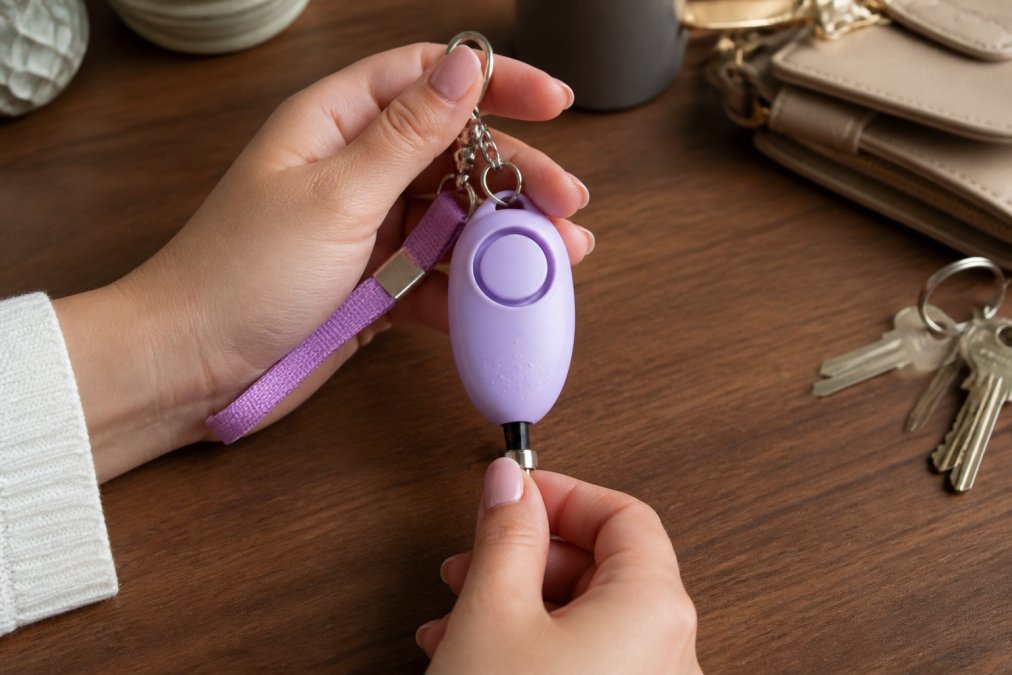
The activation mechanism comes in two main styles: button-press and pull-pin. Button activation is faster and more intuitive. Pull-pin designs, like those on the ROBOCOPP Sound Grenade, require a deliberate two-step action that prevents accidental triggers. Both work; it's a matter of personal preference.
Personal Safety Tools for College Students
College environments present unique safety challenges. You're navigating unfamiliar campuses, walking between classes at varying times of day, and often traveling alone. A personal safety alarm is one of the most practical tools for this demographic because it requires zero training, fits in a pocket or on a keychain, and works regardless of your physical strength.
For college students specifically, portability and discretion matter. You need something you'll actually carry. Defense Divas Keychains understands this. The brand's keychain designs are compact enough to clip onto your bag or keys, and the Western-inspired aesthetic means you're not carrying something that screams "I'm worried about my safety."
The psychological benefit is real for this age group. Many college students report feeling more confident walking across campus at night or leaving the library late when they have a personal safety alarm within reach. That confidence itself changes behavior, you're more aware, more present, less likely to be caught off-guard.
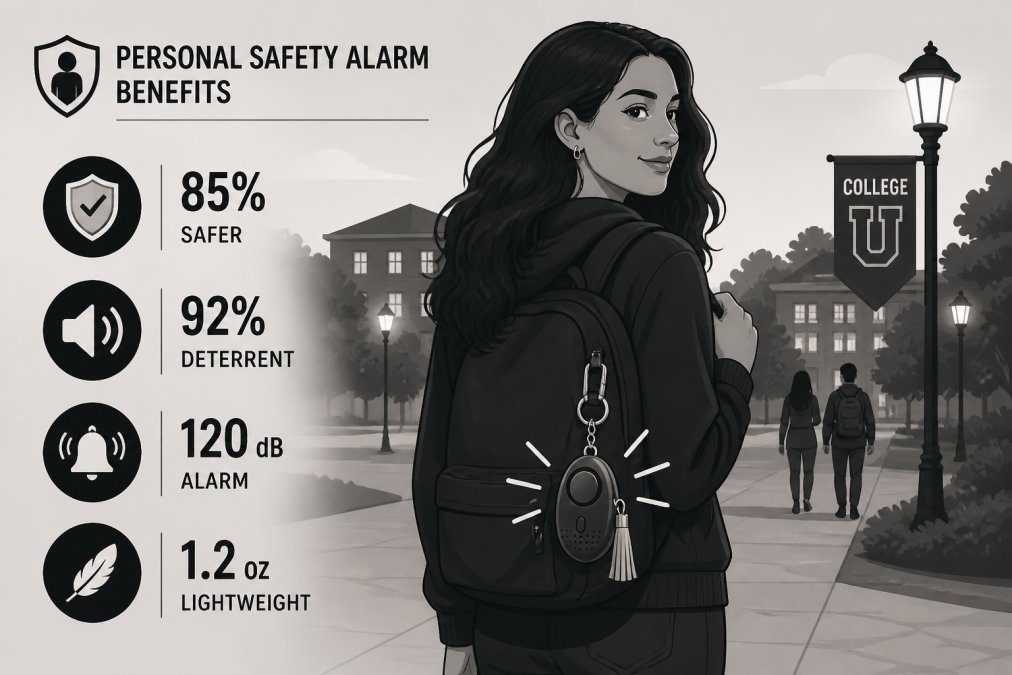
When one student brings a personal safety alarm to campus, others notice and want one. This creates a safety culture where carrying a deterrent tool becomes normalized rather than stigmatized. College safety offices increasingly recommend these devices for this exact reason: they're accessible, legal everywhere, and they work.
Quality personal safety alarms range in price, making them accessible without requiring a major financial commitment. Compare that to self-defense classes (which cost hundreds) or pepper spray (which has legal restrictions in many states), and you see why alarms have become the default choice on campuses.
How to Use a Personal Safety Alarm Effectively
Carrying a personal safety alarm is only half the equation. You need to know how to deploy it and understand when activation actually serves you. Effectiveness depends on three factors: accessibility, immediate activation, and situational awareness of what comes after you trigger it.
Accessibility comes first. Your alarm only helps if you can reach it in seconds. Keep it in a place where your fingers can find it without looking, your front pocket, clipped to your bag's exterior, or attached to your keyring. The goal is muscle memory.
Activation speed is the next layer. Spend a few minutes practicing with your alarm while you're calm and safe. Learn the exact motion: button press or pull-pin. Know how much force it requires. Under stress, the action should be automatic rather than something you have to think through.
The effectiveness of a personal safety alarm depends heavily on what happens after activation. The alarm creates a moment of disruption, a window of time when an attacker is disoriented by the noise and light. What you do in that window determines whether the tool actually protects you: you move, you run toward people, toward lit areas, toward help. The alarm is a distraction technique, not a paralyzer.
Situational awareness amplifies effectiveness. If you're already paying attention to your surroundings, you'll notice a threat earlier and activate your alarm sooner. Walk with purpose. Notice who's around you. Trust your instincts. The alarm is insurance; awareness is prevention.
Test your alarm monthly by pressing it for just a second in a safe location to confirm it still works. A dead battery defeats the entire purpose. Tell people you have it, friends, family, dating partners. This normalizes the tool and means people close to you understand that if they hear an alarm, it might be you signaling for help.
Are Personal Alarms Legal in All States
The short answer: yes, personal safety alarms are legal to carry in all 50 states. Unlike pepper spray, tasers, or knives, which face varying restrictions depending on location, personal safety alarms have no legal prohibitions anywhere in the country.
This is because alarms are non-lethal, non-injurious devices. They make noise. There's no mechanism for harming anyone, no weapon classification, no restricted materials. Federal law doesn't restrict them. State law doesn't restrict them. Local ordinances don't restrict them.
TSA regulations allow personal safety alarms on planes, but the agency is specific about which types. Battery-operated alarms with a simple activation mechanism are permitted. Most standard keychain alarms, like those from SABRE, She's Birdie, or Defense Divas Keychains, pass TSA screening without issue.
Workplace policies vary. Some employers restrict what you can carry on premises. Schools sometimes have restrictions. If you're in a controlled environment, check the specific policy. But in public spaces, a personal safety alarm is universally legal.
The lack of legal restriction is one of the strongest arguments for carrying one. You're not navigating a complex legal landscape. You grab your keychain, and you're protected.
Maintenance and Battery Testing
A personal safety alarm only works if it actually functions when you need it. Maintenance is minimal, but it's non-negotiable. The primary concern is battery life and ensuring your device hasn't failed silently.
For battery-operated alarms, replace batteries annually or if you activate the device for testing. Most alarms use standard AAA or button-cell batteries available at any drugstore.
For rechargeable models, charge them monthly even if you haven't used them. Batteries lose charge over time, especially in cold temperatures. Set a phone reminder if you need to.
Test your alarm quarterly by activating it for just one second in a safe, private location. You'll confirm the sound still works, the light still flashes (if applicable), and the activation mechanism hasn't jammed.
Storage matters too. Extreme heat or cold can degrade battery performance. Keep your alarm in normal room conditions when not carrying it. If you notice any signs of wear, cracks in the casing, corroded battery terminals, a button that sticks, replace the device.
Water resistance varies by model. Check the specifications if you're carrying yours in a gym bag or near a pool. If it's not water-resistant and it gets wet, dry it thoroughly and test it before relying on it again.
Real Protection or Peace of Mind
A personal safety alarm provides genuine protection against certain threat types. The 120-130 decibel siren is a proven deterrent. Attackers typically target people who appear vulnerable or unaware. When you carry a visible personal safety tool, you're signaling preparedness. That alone shifts you out of the easy-target category. Add the actual activation, a blast loud enough to startle anyone within earshot, and you've created a moment of disruption. In that moment, you escape.
This protection is real but conditional. It works best against spontaneous, opportunistic threats. A stranger attempting a grab or mugging is more likely to abandon the attempt when an alarm sounds. The noise is unexpected. The attacker doesn't know what comes next.
The peace of mind component shouldn't be dismissed as "just" psychological. Confidence changes behavior. When you carry a personal safety alarm, you walk differently. You're more alert. You notice details. You trust your instincts more readily. That shift in awareness actually reduces your risk.
Where people sometimes overestimate the protection is against determined, premeditated attacks or threats from someone in close physical contact. An alarm won't stop someone who's already decided to harm you and is physically present. It's a tool that works at distance, for escape, not for stopping an imminent threat at arm's length.
| Aspect | What It Provides | What It Doesn't Provide |
|---|---|---|
| Deterrent effect | Discourages opportunistic attackers | Guarantees against determined threats |
| Activation speed | Immediate response with one button | Protection if you can't reach it |
| Attention-drawing | Alerts bystanders and potential help | Ensures someone will intervene |
| Psychological benefit | Increased confidence and awareness | Elimination of all risk |
| Legal status | No restrictions anywhere | Exemption from other laws |
| Training requirement | None, works immediately | Replacement for situational awareness |
The honest take: a personal safety alarm is a legitimate, effective tool for personal security. It's not a complete solution, and it shouldn't replace awareness or good judgment. It's insurance.
Carrying a personal safety alarm addresses a real gap in personal security. The device is affordable, legal everywhere, and genuinely effective in common threat scenarios. Whether you're a college student navigating campus, a professional commuting in an urban environment, or someone who simply wants to feel more secure, a personal safety alarm is a practical first step.
Defense Divas Keychains offers stylish, functional personal safety tools designed specifically for people who want protection without sacrificing aesthetics. With unique Western-inspired designs, preorder exclusives, and personalized service, you get a keychain that matches your style while delivering genuine peace of mind. Explore the collection and find the alarm that fits your life.
Frequently Asked Questions
Are personal safety alarms actually effective at stopping an attacker?
Personal safety alarms work as a deterrent and distraction tool, not as a weapon. A 130dB siren is as loud as a jet engine and can startle an attacker, disrupt their focus, and alert people nearby to call for help. The combination of the loud noise and flashing strobe light (on some models) creates confusion that gives you time to escape. Effectiveness depends on activation speed and your ability to move away from the threat. They're most effective as part of a broader safety strategy that includes situational awareness and a plan to reach safety.
How do I know a personal safety alarm will work when I need it?
Test your alarm regularly, at least monthly, to ensure the battery is charged and the activation mechanism works smoothly. For battery-operated models, replace batteries annually or follow the manufacturer's timeline. For rechargeable alarms, charge them every few months even if you haven't used them. Keep the device in an accessible location on your keychain or bag so you can reach it in seconds. Before relying on it, familiarize yourself with how to activate it so muscle memory takes over in a stressful moment.
Can I carry a personal safety alarm on a plane or into TSA checkpoints?
Most personal safety alarms are TSA-approved and legal to carry through airport security. However, the rules depend on the specific device. Alarms with a pull-pin activation are generally accepted, while some button-activated models may face scrutiny. To be certain, check with TSA directly or contact the manufacturer before traveling. Pack your alarm in a carry-on bag, not checked luggage, and be prepared to explain what it is to security staff if asked. Always verify current TSA regulations before your trip, as policies can change.
Are personal safety alarms legal everywhere I travel or move?
Personal safety alarms are legal to carry in all 50 states and most jurisdictions. Unlike pepper spray or tasers, which have state and local restrictions, alarms are non-lethal auditory devices with no legal barriers in the U.S. However, laws can vary by location and change over time. Before moving to a new state or traveling internationally, check local regulations to confirm. If you're unsure about a specific area, contact local law enforcement or review your state's self-defense laws online.