

Table of Contents
- Non-Lethal Self-Defense Tools: What Actually Works
- Self-Defense Keychain Sets: Discreet Protection for Daily Carry
- Pepper Spray and OC Spray Effectiveness
- Personal Alarms and Noise-Based Deterrents
- Stun Guns vs. Tasers: Key Differences
- Legal Non-Lethal Weapons for Women: State Restrictions and Compliance
- Situational Awareness and De-Escalation Strategies
- Choosing the Right Tool for Your Lifestyle
Last Updated: August 20, 2026
Non-Lethal Self-Defense Tools: What Actually Works
Personal safety is a necessity, and choosing the right non-lethal self-defense tools can make the difference between feeling vulnerable and feeling empowered. The market offers many options, but not all deliver on their promises.
At Defense Divas Keychains, we understand that effective self-defense tools need to be three things: accessible, reliable, and something you'll actually carry. A tool sitting at home does nothing. That's why we focus on solutions designed for everyday carry, items that integrate seamlessly into your daily routine without compromising on protection.
The challenge most women face isn't knowing that self-defense tools exist. It's knowing which ones actually work, how to use them effectively, and whether they're legal where you live. This guide breaks down the non-lethal self-defense tools that have proven track records, explains how each one functions, and helps you match the right tool to your lifestyle and threat assessment needs.
Self-Defense Keychain Sets: Discreet Protection for Daily Carry
Keychain-based self-defense tools offer a distinct advantage: they're small enough to carry everywhere without thinking about it. A self-defense keychain set typically combines multiple protective elements into a compact, wearable package.
What makes keychain sets effective for everyday carry is disguise combined with accessibility. When your self-defense tool looks like a lipstick or fashionable keychain attachment, you're not advertising that you're armed. An attacker doesn't see a threat coming. Meanwhile, you know exactly where your protection is, clipped to your bag or in your pocket.
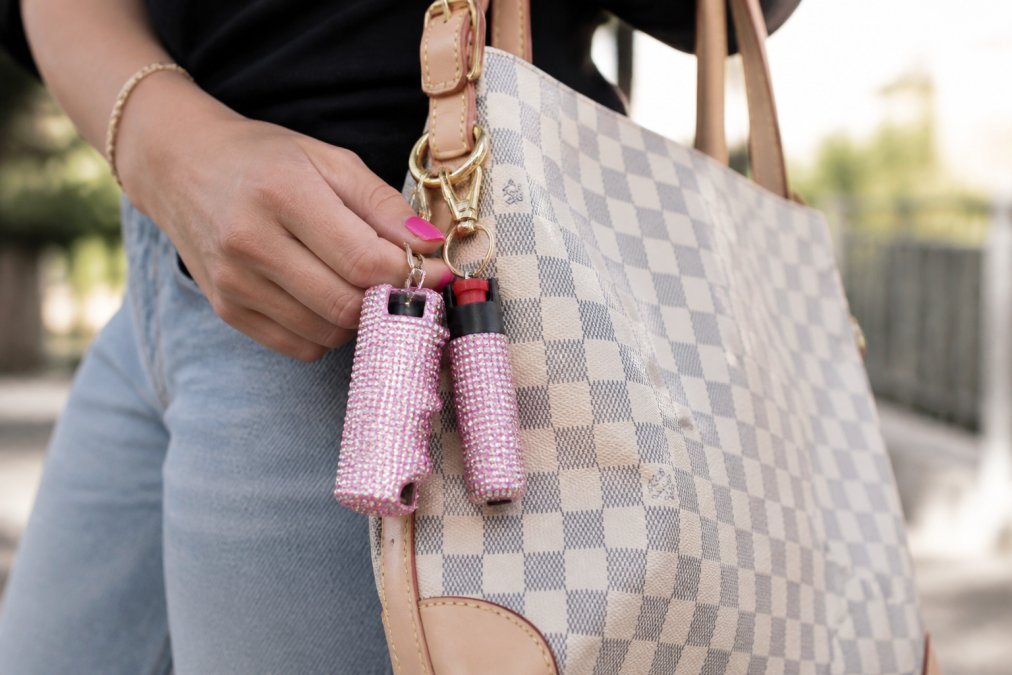
The trade-off with keychain sets is that they require you to be prepared. If you're caught off-guard or your hands are full, accessing your keychain takes a moment longer than a tool you're already holding. This is where situational awareness becomes critical.
| Tool Type | Best For | Activation | Range |
|---|---|---|---|
| Keychain stun gun | Close-range defense | Squeeze or button | Contact only |
| Pepper spray keychain | Mid-range deterrent | Spray trigger | Up to 16 feet |
| Personal alarm keychain | Attention-drawing | Pull pin | Auditory only |
| Tactical pen keychain | Multi-purpose | Grip and strike | Contact only |
Pepper Spray and OC Spray Effectiveness
Pepper spray remains one of the most effective non-lethal self-defense tools available. OC spray (oleoresin capsicum) is derived from hot peppers and causes immediate, temporary incapacitation through inflammation of the eyes, nose, throat, and skin.
When deployed correctly, pepper spray works fast. An attacker exposed to OC spray experiences involuntary eye closure, temporary blindness, and respiratory irritation within seconds, giving you a window to escape. You're not trying to win a fight. You're trying to create distance and get to safety.
Effectiveness depends on three factors: concentration of OC, delivery method, and your ability to deploy under stress. A higher OC percentage (10-18%) is more potent. A stream pattern resists wind better than a mist. A tool that feels natural to grip is easier to use when adrenaline is flooding your system.
How to Use Pepper Spray Effectively
Carrying pepper spray means nothing if you can't deploy it quickly and accurately when it matters. Effective use requires accessibility, familiarity, and understanding the mechanics.
First, accessibility. Your pepper spray needs to be somewhere you can reach in under two seconds without fumbling. A canister buried in your bag is useless. Consider carrying it in your hand when walking alone at night, clipped to your keychain where your hand naturally rests, or in a dedicated belt holster.
Second, familiarity. Spend time with your tool. Understand the safety mechanism. Practice the motion of drawing and aiming. Know whether it's a trigger-based system, a push-button activation, or a twist-and-spray design. This matters because fine motor skills deteriorate under extreme stress.
Third, understand the mechanics. Most pepper spray works best at close to medium range (3-15 feet depending on the product). Wind affects aerosol sprays more than stream or gel formulas. Aim for the attacker's face, not their body. Once you've deployed pepper spray, you move away from the threat immediately. You don't wait to see results. You create distance and get to safety.
Personal Alarms and Noise-Based Deterrents
A personal alarm doesn't incapacitate an attacker. Instead, it creates noise and draws attention, which is often enough to stop an attack before it escalates.
Personal alarms work best in populated areas where bystanders can hear and potentially intervene. Many attackers target victims they perceive as easy targets. Someone who activates a loud alarm is no longer easy, they're loud, they're drawing attention, and the attacker's risk of being identified increases dramatically. That shift in risk-reward calculation often stops an attack immediately.
Stun Guns vs. Tasers: Key Differences
Stun guns and Tasers are often confused, but they work through different mechanisms and have different effectiveness profiles.
A stun gun delivers an electrical shock through direct contact. When you press a stun gun against an attacker's body, it disrupts their nervous system temporarily, causing muscle contractions and disorientation.
A Taser works differently. It fires two probes connected by a thin wire up to 15 feet away. The probes deliver an electrical charge that causes neuromuscular incapacitation.
The key differences come down to range, accuracy, and effectiveness. A stun gun requires you to be within arm's reach, which means you have to get close to an attacker. That's riskier. A Taser gives you 15 feet of distance, a significant safety advantage. However, Tasers are more expensive and require more training to use effectively.
Voltage claims on stun guns can be misleading. What matters is amperage and the ability to deliver a sustained shock. A well-designed stun gun with moderate voltage is more effective than a high-voltage device with poor contact or weak delivery.
Legal Non-Lethal Weapons for Women: State Restrictions and Compliance
This is where many women make a critical mistake: they buy a self-defense tool without checking whether it's legal where they live. Pepper spray, stun guns, and personal alarms are legal in most places, but restrictions vary significantly by state and sometimes by city.
Pepper spray is legal in all 50 states, but regulations differ. Some states restrict the OC percentage. Some require permits. Some prohibit mail delivery of pepper spray. Before purchasing, check your state's specific regulations. The same applies to stun guns, legal in most states, but some require permits or have restrictions on voltage or design.
Personal alarms face fewer legal restrictions, but TSA regulations affect them if you travel by air. A personal alarm with a battery can trigger TSA screening, and some alarm designs may be confiscated. If you travel frequently, confirm that your specific alarm model is TSA-compliant before relying on it for travel protection.
The safest approach is to research your specific state's regulations before purchasing. Most state attorney general websites provide guidance on self-defense tool legality.
Situational Awareness and De-Escalation Strategies
The most effective self-defense tool is the one you never have to use. This is where situational awareness and de-escalation become your primary defense mechanisms.
Situational awareness means paying attention to your environment and the people in it. Notice exits. Notice who's around you. Notice changes in behavior or positioning that might indicate a threat. A woman walking alone while looking at her phone isn't aware of her surroundings. A woman walking with her head up, making occasional eye contact, and noting the people around her is harder to surprise.
This doesn't mean living in constant fear. It means being present and trusting your instincts. If a situation makes you uncomfortable, you don't need a logical reason to remove yourself from it.
De-escalation is the practice of using words and body language to reduce tension in a threatening situation. A woman who can set a firm boundary verbally might stop an assault before it starts. A firm "Stop. Stay back." delivered with confidence is often more effective than panic or compliance. Your tone and body language matter. Someone who stands tall, makes eye contact, and speaks clearly projects confidence. Someone who shrinks, avoids eye contact, and speaks softly projects vulnerability.

Physical self-defense training complements these skills. Many communities offer self-defense classes specifically for women. These classes teach both physical techniques and the mental skills of threat assessment and de-escalation.
The reality is that most self-defense situations are prevented through awareness and boundary-setting, not through using a tool. Tools are the backup plan. Awareness is the primary defense.
Choosing the Right Tool for Your Lifestyle
The best self-defense tool is the one you'll actually carry and know how to use. This requires honest assessment of your lifestyle, your comfort level, and your threat environment.
If you commute alone in an urban area with regular foot traffic, a personal alarm or a keychain-based tool makes sense. You're in an environment where noise draws attention and bystanders are likely to respond. If you spend time in isolated areas or travel alone at night, you might prioritize pepper spray or a stun gun for their more active incapacitation capability.
Fashion-conscious women often struggle with self-defense tools that look tactical or intimidating. Defense Divas Keychains solves this problem. A rhinestone-embellished stun gun or a pepper spray keychain that matches your bag's aesthetic is something you'll actually carry.
Your threat assessment matters too. Are you concerned about street crime, intimate partner violence, workplace harassment, or general personal safety? Each scenario might call for different tools.
Physical limitations are real and often overlooked. A woman with arthritis might struggle with a trigger-based pepper gun but find a personal alarm easier to use. Choose tools that match your physical capabilities.
Training and familiarity are non-negotiable. A tool you've never practiced with is worse than useless. Before carrying any self-defense tool, invest time in understanding it. Take a class if available. Practice deployment. Know the mechanics.
Cost is also a factor. Pepper spray and personal alarms are affordable. Stun guns cost a bit more. Tasers are significantly more expensive. There are effective tools at every price point.
Choosing a non-lethal self-defense tool is a personal decision that depends on your lifestyle, threat environment, and comfort level. The tools covered here all have proven track records. The key is matching the tool to your specific situation and committing to carrying it consistently. Defense Divas Keychains specializes in self-defense keychain sets that don't sacrifice style for function, offering early access to new designs through preorder exclusives and personalized service that helps you find the right tool for your needs.
Frequently Asked Questions
What is the most effective non-lethal self-defense tool for women?
Effectiveness depends on your situation and comfort level. Pepper spray offers range and incapacitation power, while personal alarms work by drawing attention and deterring attackers. Stun guns provide close-range stopping power. Many safety experts recommend carrying multiple tools, such as a self-defense keychain set combining pepper spray and a stun gun, to address different threat scenarios. Your best choice is the tool you'll actually carry and practice using.
Are self-defense keychains legal in all states?
No. Pepper spray, stun guns, and other self-defense tools face varying legal restrictions by state and sometimes by city. Some states prohibit certain types of stun guns, restrict pepper spray strength, or require permits. Before purchasing any non-lethal weapon, research your state's specific laws and the laws of any state you travel to frequently. Many retailers provide state-specific legality information at checkout to help you comply with local regulations.
How do I properly use pepper spray for self-defense?
Hold the canister upright with your thumb on the actuator. Aim slightly below the attacker's face and spray in short bursts, moving the canister side to side to cover their eyes and nose. Keep your distance, most pepper spray reaches 8 to 16 feet depending on the model. Practice with a training canister to build muscle memory. After deployment, move away from the area immediately and call law enforcement. Always check wind direction, as crosswind can reduce effectiveness or cause blowback.
What should I look for when choosing a non-lethal self-defense tool?
Consider range (how far the tool reaches), ease of deployment (can you activate it quickly under stress), concealment (will you actually carry it daily), and local legality. Evaluate your physical capability, some tools require strength or close contact, while others work at distance. Think about your lifestyle: commuters benefit from compact keychains, while those in vehicles might prefer larger tools. Finally, choose something you're comfortable with and willing to train on. A tool you don't carry or understand is useless.