

Table of Contents
- Best Overall Personal Safety Device
- Devices for Runners and Cyclists
- Discreet Safety Wearables and Keychains
- Personal Safety Device Laws and Legal Compliance
- How to Use a Personal Safety Alarm Effectively
- Personal Safety Apps vs Physical Devices: Which Works Best
- How to Choose the Right Personal Safety Device for Your Lifestyle
- Conclusion
Last Updated: August 13, 2026
Best Overall Personal Safety Device
The best personal safety device is the one you'll actually carry and use. A device sitting at home offers no protection. For most people, a compact personal alarm with a loud siren and LED light combines effectiveness, ease of use, and legal simplicity across all states.
Defense Divas Keychains leads this category by pairing functional safety devices with stylish, Western-inspired designs that make you want to carry them daily. Unlike generic safety tools, Defense Divas transforms personal protection into an accessory you'll integrate seamlessly into your bag or keychain. The brand's preorder exclusives and personalized service provide early access to designs matching your aesthetic while delivering serious protection.
A 130-decibel siren is loud enough to startle an attacker and alert people nearby. It requires no training, no legal licensing, and works equally well for first-time users or those experienced with self-defense. The LED light adds visibility in dark situations, functioning as both a deterrent and practical tool for navigating unfamiliar areas.
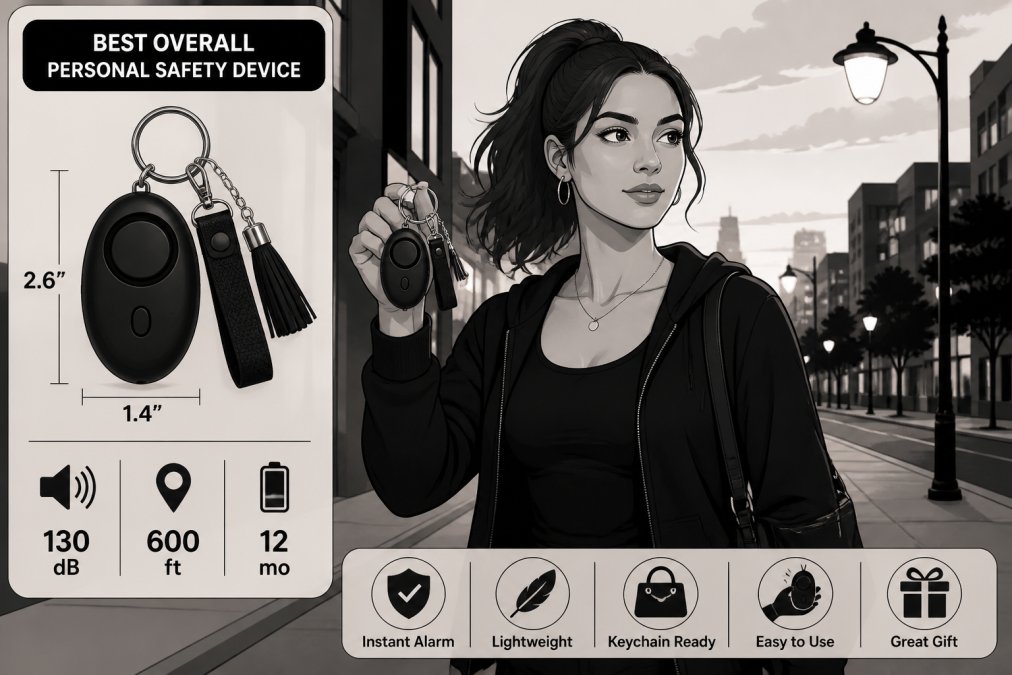
Quality personal alarms differ in activation mechanism. Pull-pin designs require deliberate action, reducing accidental triggers but needing fine motor control during crisis. Button-activated alarms like SABRE devices offer faster deployment but carry slightly higher accidental activation risk. Defense Divas Keychains balances this by ensuring devices are intuitive for emergencies yet sturdy enough for daily carry without false alarms.
Carrying a personal safety device shifts your mindset. You move with more awareness and confidence, and predators target victims appearing vulnerable. That psychological benefit often matters more than the device itself.
Devices for Runners and Cyclists
Runners and cyclists face unique safety challenges: they're moving, often isolated, and frequently out during low-light hours. A personal safety device for this use case needs to be lightweight, secure to your body or gear, and accessible without stopping your activity.
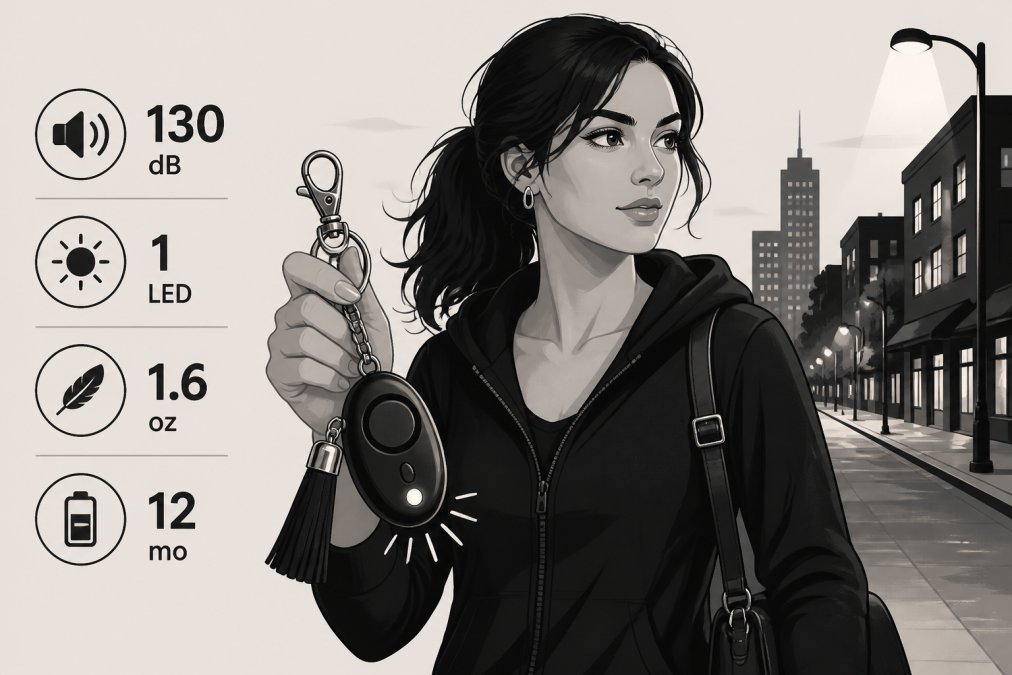
For runners, a personal alarm attached to your shoe, armband, or pocket works better than a keychain version. The SABRE Personal Safety Alarm with LED Light clips securely to running gear, with the LED light alerting drivers to your presence while functioning as a deterrent. The 130-decibel siren is equally effective whether stationary or moving.
Cyclists benefit from similar logic with added considerations. You need a device that won't interfere with grip or balance. Mounting a personal alarm on your handlebar bag or seat bag keeps it accessible without compromising control. The LED light becomes even more valuable for cyclists, as visibility to traffic is critical.
The key differentiator for runners and cyclists is attachment security. Test any device with your actual running or cycling routine before relying on it. The worst time to discover a flaw is during an actual emergency.
Discreet Safety Wearables and Keychains
Not everyone wants a visible safety device. Some situations call for something blending into everyday carry without announcing its purpose.
Defense Divas Keychains specializes in this space. Their designs integrate safety tools into accessories that look like fashion statements rather than self-defense equipment. A Western-inspired keychain attached to your purse delivers the same protective function as a basic alarm while looking intentional and stylish.
Beyond keychains, the Birdie+ Personal Safety Alarm combines a 130-decibel siren with smartphone connectivity, allowing you to send silent alerts to emergency contacts without activating the loud alarm. This matters in situations where noise might escalate danger or where you need help without broadcasting your location to everyone nearby.
Discreet doesn't mean less effective. A 130-decibel siren is equally loud whether housed in a designer keychain or tactical device. The difference is purely aesthetic and psychological, you're more likely to carry something fitting your style, and that consistency is what makes any device actually protective.
| Device Type | Best For | Activation Speed | Discretion Level |
|---|---|---|---|
| Keychain alarm | Daily carry, fashion-conscious users | Medium (pull-pin) | High |
| Wearable alarm | Runners, commuters | Fast (button) | Medium |
| Smart alarm (Birdie+) | Tech-forward users, multi-threat situations | Fast (app or button) | High |
| Defense Divas designs | Style-conscious safety seekers | Medium | High |
Personal Safety Device Laws and Legal Compliance
Personal safety device laws vary significantly by state, and carrying an illegal device creates more problems than it solves.
Personal alarms are legal everywhere in the United States. A 130-decibel siren is noise, not a weapon, so it falls outside most weapons restrictions. You can carry a personal alarm on a plane, in a courthouse, and virtually anywhere else without legal risk.
Defense sprays (pepper spray and mace) exist in a legal gray zone. Most states allow them for self-defense, but some restrict active ingredient concentration, canister size, or require licensing. A few states prohibit them entirely. Tasers like the TASER Pulse+ occupy an even more restricted category, with many states requiring training or licensing to carry one.
Research your state's laws before purchasing any device beyond a personal alarm. Most state attorney general websites have sections on self-defense laws. If traveling across state lines, verify laws in each state you'll visit, what's legal in one state might be prohibited in the next.
How to Use a Personal Safety Alarm Effectively
Owning a personal safety device means nothing if you don't know how to deploy it. Effectiveness depends on speed, accessibility, and the ability to use it under stress.
Keep your personal safety alarm accessible, not buried in a bag. Consider wearing it on your person, clipped to a belt loop, in a jacket pocket, or attached to your bag's exterior. The goal is to grab it in under two seconds without looking.
Practice activation before you need it. Spend a minute activating and deactivating it several times so your hands know what to do if adrenaline spikes. This is especially important if your device uses multiple activation steps.
Understand what the alarm does and doesn't do. A personal alarm creates noise and draws attention, it doesn't incapacitate an attacker. Your job is to run or move to safety once the alarm sounds.
Test your device regularly. A personal alarm with a dead battery is useless. Most modern alarms like SABRE and Birdie models are reusable and rechargeable, so test them monthly to confirm they still function.
Personal Safety Apps vs Physical Devices: Which Works Best
Personal safety apps like Life360, Google's Emergency SOS feature, and Noonlight offer advantages physical devices can't match. They share your location with emergency contacts or 911 dispatchers, create incident records, and allow discreet help-seeking without activating a loud alarm.
The critical limitation of apps is dependency. They require your phone to be charged, on you, and connected to a network. A dead battery, a phone left at home, or poor cell coverage renders them useless. A personal alarm works without batteries (some models), without connectivity, and without any technology beyond a simple activation mechanism.
The best approach combines both. Carry a physical personal safety alarm for immediate, technology-independent protection. Use a smartphone emergency app as a backup providing location sharing and official emergency response. If choosing between the two due to budget or preference, prioritize the physical device. An alarm you have is infinitely more protective than an app you're too embarrassed to carry or too paranoid about battery life to use.
How to Choose the Right Personal Safety Device for Your Lifestyle
Selecting a personal safety device requires honest assessment of your actual life, not the life you think you should have.
Start with your daily patterns. Do you commute alone? Travel frequently? Run or cycle at dawn or dusk? Each scenario suggests different tool priorities. A commuter benefits from a discreet device working on public transit. A runner needs something that won't interfere with movement. A frequent traveler needs something legal everywhere, which points to personal alarms.
Consider your comfort level with visibility. Some people want a device signaling "I'm prepared and not an easy target." Others prefer something looking like a fashion accessory. Defense Divas Keychains serves the second category by making safety devices that don't look like safety devices.
Assess your willingness to train. A TASER Pulse+ is more effective than an alarm but requires training and carries legal restrictions. A personal alarm requires zero training. If you're unlikely to take a self-defense class, choose a device that doesn't require one.
Think about your budget and maintenance tolerance. Basic personal alarms cost under $30 and require minimal maintenance. Smart alarms with app integration cost more and require regular charging and app updates.
Finally, consider your actual threat level. Your device should match your realistic threat assessment, not your anxiety level.
| Factor | Best Option | Why |
|---|---|---|
| Daily commute on public transit | Personal alarm or Defense Divas design | Legal everywhere, quick activation |
| Running/cycling alone | Wearable alarm with LED | Secure attachment, visibility to traffic |
| Travel across multiple states | Personal alarm only | Legal in all states without exception |
| Tech-forward user | Birdie+ or TASER Pulse+ | App integration, location sharing |
| Fashion-conscious prioritizer | Defense Divas Keychains | Stylish designs that actually work |
| Budget-conscious | SABRE basic alarm | Effective, affordable, legal |
Choosing a personal safety device is ultimately about removing friction from protection. The best device is the one you'll actually carry every day, deploy without hesitation, and maintain consistently. A stylish option from Defense Divas Keychains matching your aesthetic beats a "better" device you leave at home. An inexpensive personal alarm beats an expensive taser you're afraid to carry due to legal uncertainty. The psychology of carrying protection often matters as much as the device's technical capability.
Start with an honest assessment of your daily life, your threat environment, and what you'll realistically maintain. Then choose accordingly.
Frequently Asked Questions
What is the most effective personal safety device?
The most effective personal safety device depends on your situation. A 130 dB personal alarm works well for alerting others and deterring attackers through audible alerts and strobe lights. Defense sprays offer direct incapacitation at close range. Smart alarms like Birdie+ combine loud sirens with app-based location sharing and emergency contact features. For maximum effectiveness, choose based on your lifestyle: runners benefit from compact, lightweight alarms; travelers may prefer devices with emergency SOS integration; and those wanting discreet help appreciate smart alarm features.
Are personal safety alarms legal to carry in all states?
Personal safety alarms are legal in all 50 states, making them one of the most accessible personal safety device options. However, other devices carry state and local restrictions. Defense sprays are legal in most states but banned or restricted in some (including New York and Massachusetts without permits). Conducted energy weapons like TASERs are heavily regulated and illegal in many states. Always check your state's specific laws before purchasing any defense tool, and verify regulations if you're relocating or traveling frequently.
How do personal safety apps compare to physical devices like alarms or keychains?
Physical devices like alarms and defense sprays provide immediate, hands-on protection without relying on cell service or battery charge on your phone. Personal safety apps excel at location sharing, emergency contact notification, and discreet help-seeking (like fake call features). Smart alarms combine both: they function as standalone devices with loud sirens but also integrate app features for enhanced response. For maximum safety, many experts recommend carrying both a physical device and using a safety app, since each addresses different scenarios.
What should I look for when choosing a personal safety device?
Consider these factors: decibel rating (130 dB alarms are standard for effective deterrent), activation mechanism (pull-pin vs. button), battery life and maintenance requirements, portability and concealment options, and legal compliance in your area. Evaluate your lifestyle: commuters and runners need lightweight, compact designs; travelers benefit from TSA-compliant devices; and those wanting style may prefer fashionable keychains. Test the activation to ensure you can operate it quickly under stress, and verify the device meets industry standards for reliability.