

Table of Contents
- Can You Take Safety Keychains on Airplanes?
- Understanding TSA Prohibited Items List for Keychains
- Carry-On vs. Checked Baggage: Where Your Keychain Can Go
- Self-Defense Tools in Checked Luggage
- What Happens If TSA Confiscates an Item
- How to Pack Your Keychain for Air Travel
- TSA-Approved Travel Accessories and Alternatives
- International vs. Domestic TSA Variations
Last Updated: August 10, 2026
Can You Take Safety Keychains on Airplanes?
Whether you can take safety keychains on airplanes depends on the specific design and TSA classification. Some safety keychains are allowed; others are strictly prohibited. Arriving at the airport only to have your personal safety tool taken away creates frustration and leaves you vulnerable during travel. Attempting to bring a prohibited weapon through security can result in confiscation, fines, or legal complications. This guide walks you through TSA's actual rules, explains carry-on versus checked baggage differences, and shows you how to pack your keychain to make it through airport security.
Understanding TSA Prohibited Items List for Keychains
The Transportation Security Administration maintains a comprehensive prohibited items list, and keychains fall into a murky middle ground. Some are purely decorative, while others are specifically designed as weapons. The TSA's screening process focuses on whether an item can be used to harm someone, which is why identical-looking keychains can have completely different outcomes at security.
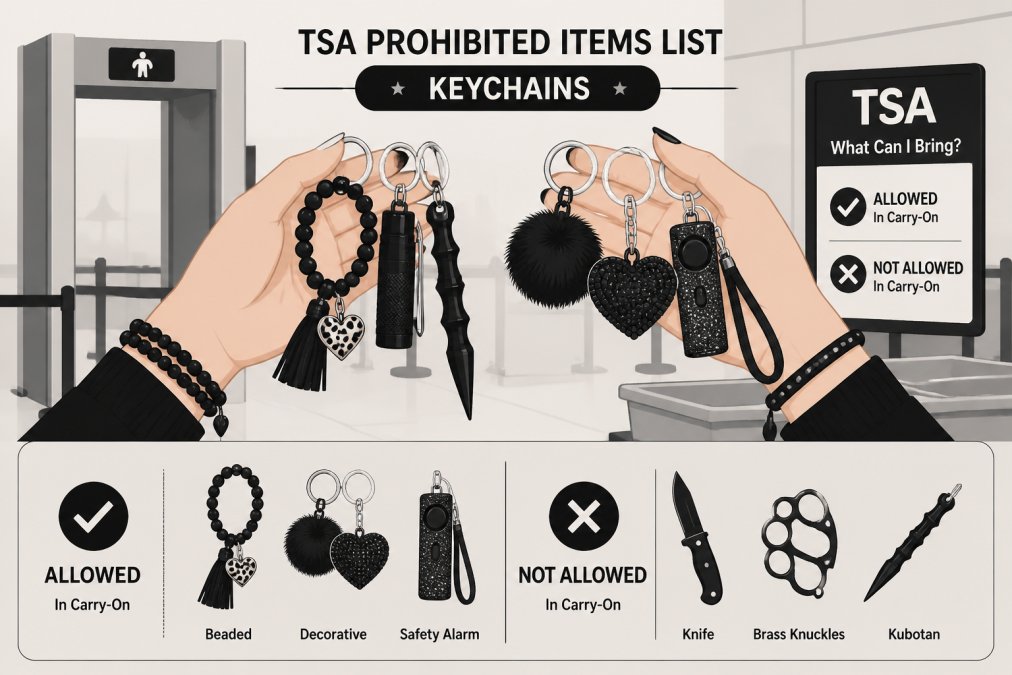
Weapons Classified as Prohibited
The TSA prohibited items list explicitly bans several types of keychains designed for self-defense. These restrictions apply to both carry-on luggage and checked baggage.
Brass knuckles keychains are absolutely prohibited, even if small or marketed as "fashion accessories." The TSA treats them as weapons because they concentrate force in a punch. Kubotans and tactical keychains with sharp points for striking are banned. Keychains with blades or sharp implements, including small knives or razors, are strictly prohibited. Pepper spray and self-defense spray keychains are prohibited in carry-on luggage but allowed in checked baggage under specific conditions. Stun gun or taser keychains are completely prohibited in both carry-on and checked baggage.
Non-Weaponized Keychains That Pass Security
Decorative beaded keychains with no sharp points typically pass through security without issue. Keychain flashlights are generally allowed in both carry-on and checked baggage. Whistle keychains are permitted. Personal alarm keychains that emit loud sound are allowed. Keychain mirrors or reflective items designed to disorient an attacker are typically allowed if they lack sharp edges.
The key distinction: if the item's primary design purpose is to strike, cut, or inject, it's prohibited. If it's decorative, creates noise, emits light, or serves a non-weapon function, it usually passes screening.
Carry-On vs. Checked Baggage: Where Your Keychain Can Go
Understanding the difference between carry-on and checked baggage rules is essential for traveling with any keychain. The TSA applies different screening standards to items in the cabin versus those in cargo hold.
Carry-On Luggage Rules
Carry-on luggage receives the most scrutiny at security checkpoints. Any keychain that could potentially be used as a weapon during flight is strictly prohibited in carry-on bags. Even if a keychain is allowed in checked baggage, it may be prohibited in your personal carry-on or under-seat bag.
For carry-on travel, stick to non-weaponized keychains like decorative beads, whistles, flashlights, or personal alarms. The screening process is visual and mechanical, TSA agents examine x-ray images and can see internal structure. If your keychain has a metal striking surface, blade, or pointed weapon design, it will be flagged immediately.
Checked Baggage Allowances
Checked baggage receives different treatment. Once your suitcase is placed in cargo hold, TSA screening focuses on items that could threaten the aircraft itself rather than passengers in the cabin.
Pepper spray is the primary exception. You can pack one self-defense spray canister in checked baggage if it's equipped with a safety mechanism to prevent accidental discharge and contains less than 2% tear gas by mass. Most other prohibited keychains remain banned from checked baggage as well. Brass knuckles, kubotans, stun guns, and bladed keychains are confiscated whether in carry-on or checked suitcase.
Self-Defense Tools in Checked Luggage
For travelers prioritizing personal safety, understanding what self-defense tools are actually allowed in checked luggage is critical. The TSA's rules here are narrow.
The primary self-defense tool allowed in checked baggage is pepper spray, with strict limitations. You can pack one aerosol self-defense spray container with less than 2% tear gas by mass with a safety mechanism to prevent accidental discharge. This is the only self-defense spray allowed.
Many travelers mistakenly believe that checking a prohibited item makes it acceptable. This is false. TSA agents inspect checked baggage, and prohibited items are confiscated just as they would be from carry-on luggage. If you're traveling with a checked suitcase and want a self-defense tool, pepper spray is your only legitimate option under TSA rules.
What Happens If TSA Confiscates an Item
Understanding the confiscation process and its potential consequences is important for anyone traveling with keychains.
Immediate Confiscation Process
When TSA agents discover a prohibited keychain during security screening, the process is straightforward. The agent will inform you that the item is prohibited and remove it from your bag. In most cases, you lose the item with no refund, no option to mail it home, and no appeal process for prohibited items.
If your keychain is flagged during x-ray screening of carry-on baggage, a TSA agent will pull your bag aside and remove the prohibited item. If discovered during checked baggage screening, you won't know until you arrive at your destination or the airline contacts you.
Legal Repercussions Beyond Confiscation
While most prohibited keychain confiscations result only in loss of the item, attempting to bring certain weapons through airport security can trigger legal consequences. The TSA can issue civil penalties for prohibited items, ranging from hundreds to thousands of dollars depending on the item and circumstances.
Beyond TSA fines, you could face federal criminal charges. Stun guns and tasers are prohibited under federal law at airports, and attempting to bring one through security can result in felony charges. Brass knuckles are illegal in many states, and bringing them through an airport security checkpoint could expose you to state-level criminal prosecution.
Attempting to bring a prohibited item through airport security creates a permanent record on your TSA profile and can affect future travel. Repeat violations can result in additional scrutiny at every airport and potential revocation of trusted traveler programs like TSA PreCheck.
How to Pack Your Keychain for Air Travel
Packing your keychain correctly for air travel requires understanding both TSA rules and practical security measures.
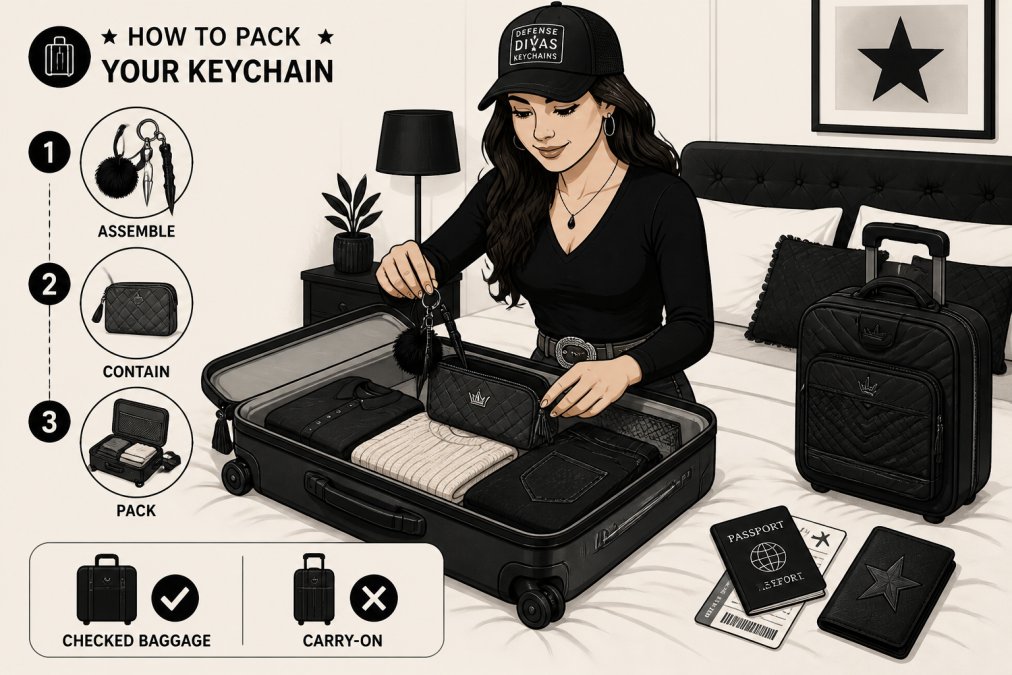
Step 1: Know Your Keychain Type
Before you pack anything, identify exactly what type of keychain you're traveling with. Examine it carefully for sharp points, blades, striking surfaces, or electrical components. If it's marketed as a self-defense tool with striking capability, TSA will likely classify it as a weapon.
If you're uncertain about your specific keychain, check the TSA's official website or contact them directly before traveling. The TSA has a social media channel where you can submit photos of items and receive clarification on whether they're allowed.
Step 2: Choose Your Packing Method
For carry-on bags, place your keychain in an easily accessible pocket where TSA agents can inspect it quickly. For checked baggage, place it in an exterior pocket or clearly visible location within your suitcase to facilitate inspection.
Avoid hiding your keychain in locked compartments or deep within luggage. Transparency during security screening is always the safer approach.
Step 3: Declare If Needed
In most cases, you don't need to declare a permitted keychain at security. However, if you're traveling with pepper spray in checked baggage, you must declare it to the airline when checking your bag. Pepper spray requires specific handling and storage procedures in the cargo hold. Failing to declare it can result in significant fines and potential criminal charges.
Step 4: Prepare for Security Screening
Arrive at security with realistic expectations. If your keychain has metallic components or unusual design, be prepared for agents to ask about it. Have a clear, honest explanation ready. If an agent asks to inspect your keychain, cooperate fully. If the agent determines it's prohibited, accept the confiscation without argument.
TSA-Approved Travel Accessories and Alternatives
If your preferred keychain won't make it through airport security, several TSA-approved alternatives provide personal safety benefits without triggering confiscation.
Whistle keychains draw attention to your location and can deter potential threats by alerting others nearby. Personal alarm keychains emit loud sound when activated. Flashlight keychains serve dual purposes, practical for navigating airports and parking areas, and a bright light can disorient someone attempting to approach you. Decorative beaded keychains without sharp points are allowed and can be attached to your bag for quick identification.
TSA-approved alternatives may not provide the same level of protection as dedicated self-defense tools, but they're far more valuable than a confiscated keychain that never makes it onto the plane.
International vs. Domestic TSA Variations
Traveling internationally introduces additional complexity. TSA rules apply only to flights departing from or arriving in the United States. International airports and foreign airlines operate under different security protocols.
Domestic flights within the United States follow TSA rules exclusively. International departures from U.S. airports require compliance with both TSA rules and the destination country's regulations. Even if your keychain passes TSA screening, you could face confiscation by the destination country's authorities. Return flights to the United States from international destinations require compliance with the destination country's security rules.
Research before traveling internationally. If you're planning international travel and want to bring a specific keychain, research both TSA rules and destination country regulations. Contact the destination airport's security authority or check their website for prohibited items lists. For international travel, stick to universally safe options like decorative beads, whistles, or flashlights, these are unlikely to violate any country's security regulations.
Traveling with personal safety tools requires balancing your security needs against TSA regulations and airport screening realities. The keychains that pass airport security may not be the strongest self-defense options available, but they're infinitely more valuable than a confiscated item.
Start by identifying exactly which keychain you want to travel with, verify it against the TSA's prohibited items list, and pack it accessibly for security screening. If your preferred keychain won't make it through, Defense Divas Keychains can help you find a stylish, TSA-approved alternative that supports your personal safety priorities without airport complications.
Frequently Asked Questions
Are self-defense keychains considered weapons by the TSA?
It depends on the keychain type. TSA classifies items as weapons based on design and function, not intent. Kubotans, tactical pens with sharp points, and keychains with bladed instruments are prohibited in carry-on luggage. Non-weaponized keychains like personal alarms or decorative items without sharp edges generally pass security screening. Always check the TSA website or contact your airline before traveling to confirm your specific keychain is approved.
Can I pack self-defense tools in checked luggage on an airplane?
Some self-defense tools are allowed in checked baggage but prohibited in carry-on. For example, certain tactical items and tools with sharp points may be packed in checked luggage if they're properly secured and don't violate airline-specific policies. However, items like pepper spray and certain weapons remain prohibited in both carry-on and checked bags. Check with your airline's specific restrictions before packing, as policies vary by carrier.
What happens if TSA confiscates my keychain at the airport?
TSA will remove the prohibited item and either dispose of it or hold it for a set period. You won't receive compensation for confiscated items. In rare cases, if the item violates state or federal law, you could face legal consequences beyond confiscation. The TSA provides notice of what was confiscated, but the primary consequence is loss of the item. Arriving early allows time to resolve issues before your flight departs.
How do I know if my specific keychain will make it through airport security?
Check the TSA website's prohibited items list and search for your keychain type. Items with sharp points, blades, or designs that resemble weapons are flagged. Contact the TSA directly through their social media channels or call ahead if you're uncertain. Pack questionable items in checked baggage rather than carry-on when possible. For Defense Divas keychains, verify the specific product specifications match TSA guidelines before traveling.