

Table of Contents
- Understanding Your Safety Keychain Components
- Step-by-Step Deployment: How to Use a Safety Keychain in an Emergency
- Stylish Self-Defense Keychains for Women: Choosing the Right Tool
- Self-Defense Keychain Laws by State: What You Need to Know
- How to Carry Self-Defense Items Safely and Legally
- Building Muscle Memory and Confidence
- Maintenance, Expiration, and Readiness
- Common Mistakes to Avoid
Last Updated: August 26, 2026
Understanding Your Safety Keychain Components
A safety keychain is a compact personal protection device combining multiple self-defense tools into one accessible package. Most contain three main elements: an audible alert system (typically 130-140 decibels), a physical deterrent like a kubotan, and sometimes pepper spray (the CDC). The personal alarm startles assailants and draws attention from bystanders. The impact tool lets you apply force if needed, while pepper spray temporarily incapacitates by affecting eyes, nose, and throat.
Defense Divas Keychains offers stylish options that combine protective elements with aesthetics for daily carry users. A well-designed safety keychain separates from your keys instantly when needed, keeping your hands free and response time fast.
Step-by-Step Deployment: How to Use a Safety Keychain in an Emergency
When you need your safety keychain, seconds matter. The deployment process should feel automatic through practice and proper positioning.
Positioning for Quick Access
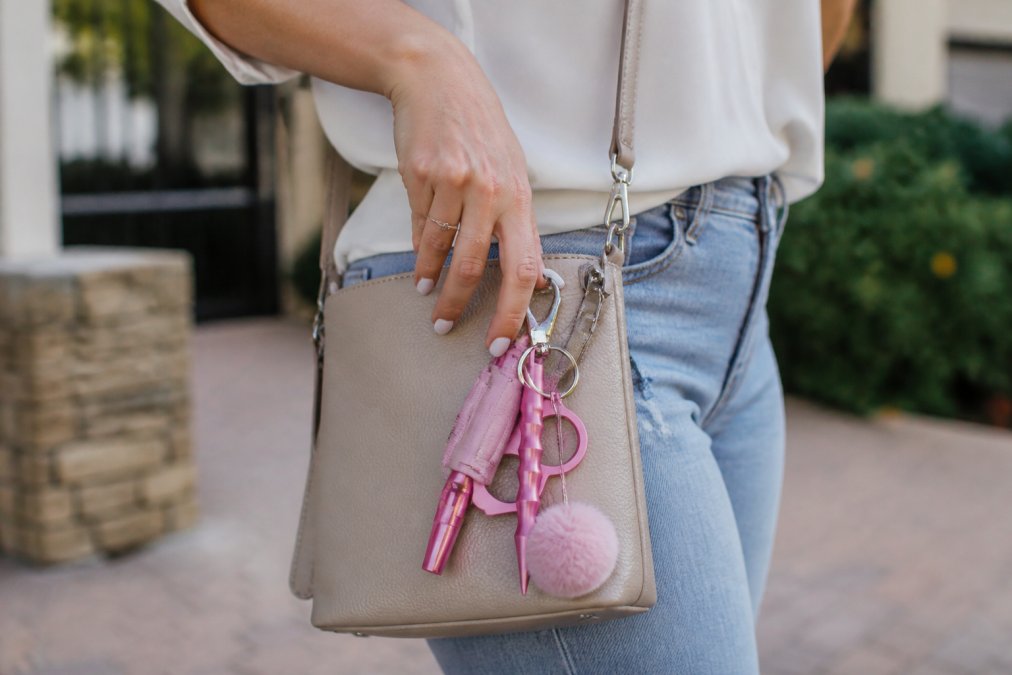
Your safety keychain must be accessible in under two seconds, not buried in a purse's interior pocket. The best positioning is a clip-on design on your bag's exterior, a pocket placement on your jacket, or a wrist attachment. During your daily routine, develop a habit of knowing exactly where your keychain is. If you're walking to your car at night, your hand should know the path to it without conscious thought.
Executing the Deployment
The moment you recognize a genuine threat, create distance first. Move away from the assailant while keeping your eyes on them. Your first action is always escape; your safety keychain is a backup tool, not a primary strategy.
If escape is blocked, reach for your keychain with your dominant hand and separate it from your keys in one motion. This frees your other hand and prevents entanglement.
For a personal alarm: Activate it immediately. The 130+ decibel sound will startle the assailant and alert people nearby. Keep moving toward safety while the alarm is active.
For an impact tool: Grip firmly with your fist, positioning the striking end between your knuckles. Target vulnerable areas: the bridge of the nose, the instep, or the inside of the knee. Strike decisively and immediately move away.
For pepper spray: Remove the safety clip and aim at the assailant's face from 6 to 10 feet away. Spray in short bursts rather than one long stream. Move away immediately after spraying.
Stylish Self-Defense Keychains for Women: Choosing the Right Tool
The market for self-defense keychains now prioritizes aesthetics alongside function. Your safety tool doesn't have to announce itself; it should blend into your daily carry while remaining instantly accessible.
When choosing a keychain, evaluate functionality, concealability, and personal comfort with the tool. A keychain that looks beautiful but feels awkward in your hand won't be useful when you need it.
Defense Divas Keychains specializes in designs merging Western-inspired aesthetics with practical self-defense features. Their preorder exclusives allow access to new styles before wide availability, and their small-business approach means personalized service.
Consider the type of threat response you're most comfortable with. Some women prefer pepper spray's non-contact nature. Others feel more confident with a personal alarm because it's passive and doesn't require aim or force. Impact tools appeal to users wanting a tactile, immediate response. The best tool is the one you'll actually carry and feel confident using.
Size matters significantly. A keychain that's too large becomes a burden; one that's too small disappears into your bag. The ideal size fits comfortably in your hand, attaches securely, and doesn't require significant fumbling to deploy.
Self-Defense Keychain Laws by State: What You Need to Know
The legality of self-defense keychains varies significantly by state. Before purchasing any safety keychain, research the laws in your state and any states you travel to regularly.
Personal alarms are legal in all 50 states. These devices produce noise without chemicals or physical force, making them an excellent starting point for new users.
Pepper spray laws are complex and state-specific. Most states allow civilian possession, but some restrict canister size or formulation. New York requires a license. Massachusetts bans it entirely. California allows it but restricts canisters to 2.5 ounces or less (ca.gov). Before carrying pepper spray, verify your state permits it and understand any restrictions.
Impact tools like kubotans fall into a gray area in many states. Some classify them as illegal weapons; others permit them if not used as a primary weapon. States like New York and California have stricter regulations. Check your state's weapon laws before carrying.
How to Carry Self-Defense Items Safely and Legally
Carrying self-defense items safely means preventing accidental deployment and unauthorized access. Your keychain should be secured in a way that keeps it accessible to you but not to others, especially children.
If carrying pepper spray, ensure the safety clip or cap is engaged. Many canisters have a two-stage activation process preventing accidental discharge.
For impact tools, secure them so they won't fall out or shift unexpectedly. A clip-on design is ideal because it keeps the tool visible and prevents it from sliding into a bag's depths.
Use an exterior pocket or clip attachment rather than burying your keychain in an interior compartment. The tool is useless if you can't reach it in seconds.
If you have children or roommates, store your keychain in a secure location when not carrying it. A small locked box or high shelf works well.
For air travel: Personal alarms are permitted in carry-on and checked luggage. Pepper spray is prohibited in carry-on bags and allowed in checked luggage only (one 2% by mass canister with specific safety requirements) (tsa.gov). Impact tools are generally prohibited in carry-on bags but may be allowed in checked luggage. Verify TSA rules before traveling.
Building Muscle Memory and Confidence
The difference between owning a safety keychain and being able to use it is muscle memory, the automatic response your body develops through repetition.
Build muscle memory through regular practice. Once a week, practice reaching for your keychain and separating it from your keys or bag in different environments. If carrying pepper spray, practice removing the safety cap without spraying. If you have an impact tool, practice your grip and striking motion on a safe target like a pillow.
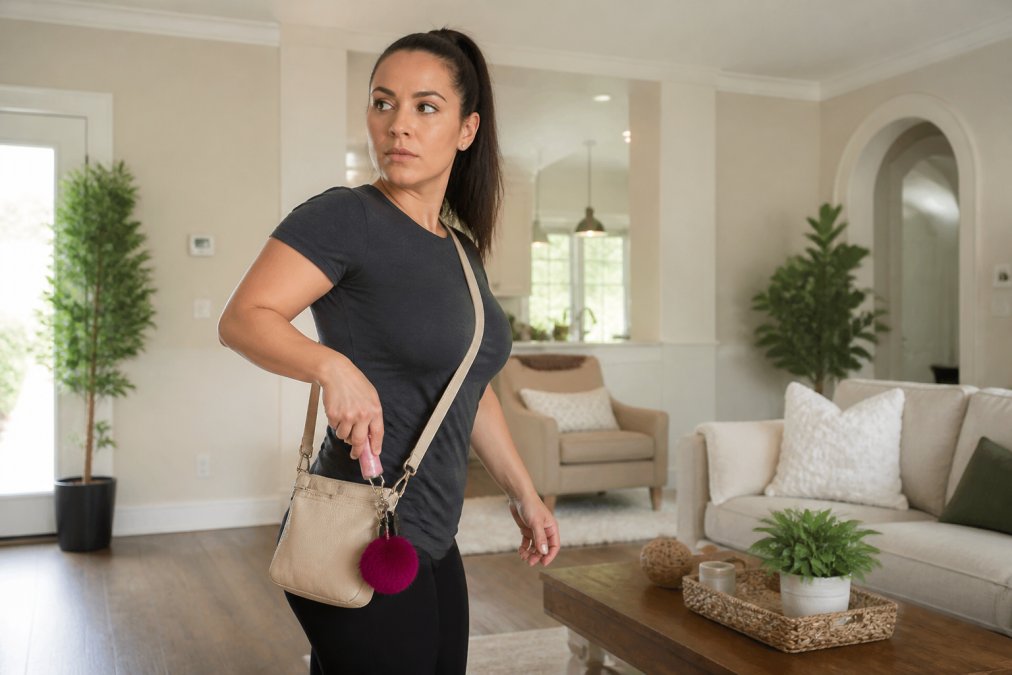
Confidence comes from knowing you've practiced. Under stress, your body reverts to what it knows. If you've practiced your deployment hundreds of times, that motion will surface automatically.
Many women benefit from taking a self-defense class incorporating their actual keychain. An instructor can correct your form and provide psychological preparation through threat scenario practice.
Visualization is equally important. Spend time mentally rehearsing yourself responding effectively to a threat. This mental rehearsal primes your nervous system and makes the physical response feel less foreign when it happens.
Maintenance, Expiration, and Readiness
A safety keychain that's dead, expired, or broken won't protect you. Maintenance is part of responsible self-defense preparation.
Personal alarms require battery replacement. Most use coin-cell batteries lasting one to three years. Check the battery compartment monthly and replace immediately if the alarm sounds weak or won't activate.
Pepper spray canisters have expiration dates printed on them. The irritant degrades over time. Check expiration dates quarterly and replace expired canisters. Mark your calendar to replace pepper spray annually or according to its expiration date.
Impact tools don't expire but can wear or break. Check the attachment point where your keychain connects to your keys or bag. If the clip is loose, repair or replace it before it fails.
Test your personal alarm's sound monthly in a safe location. This confirms the battery is working and reinforces the sound in your memory. Keep your keychain accessible during daily routine, a safety tool that stays in a drawer won't help when you need it most.
Common Mistakes to Avoid
The most common mistake is carrying a safety keychain you've never practiced using. Under stress, fine motor skills decline. If you haven't practiced, you'll hesitate or deploy incorrectly. Practice before you carry.
Another frequent error is choosing a tool based purely on aesthetics without considering whether you're comfortable using it. The tool you'll actually deploy is better than one you'll hesitate to use.
Carrying an illegal device in your state carries legal consequences. Before purchasing, verify legality.
Neglecting maintenance is another oversight. Regular maintenance, checking batteries monthly, verifying expiration dates, testing the alarm, takes five minutes per month and keeps your tool ready.
Relying solely on your keychain for safety is a mindset mistake. Your keychain is a tool, not a complete strategy. Situational awareness, de-escalation skills, and the ability to recognize danger before it escalates are more important than any physical tool.
Finally, many women carry their keychain but don't develop situational awareness to match. The best self-defense is avoiding dangerous situations entirely.
Personal protection starts with preparation. Understanding how to use a safety keychain means knowing your specific tool, practicing its deployment, and carrying it consistently. Defense Divas Keychains provides stylish options that make daily carry practical and fashionable, combining Western-inspired designs with functional safety features. Get started with Defense Divas Keychains and build the confidence that comes from being genuinely prepared.
| Component | Purpose | Maintenance | Frequency |
|---|---|---|---|
| Personal Alarm | Audible deterrent (130-140 dB) | Check battery, test sound | Monthly |
| Impact Tool | Physical deterrent for close threats | Inspect attachment, verify integrity | Monthly |
| Pepper Spray | Chemical irritant for distance defense | Verify canister pressure, check expiration | Quarterly |
| Quick-Release Clip | Enables fast separation from keys | Test detachment motion, inspect wear | Monthly |
Frequently Asked Questions
Q: Is it legal to carry a safety keychain everywhere?
A: Legality varies significantly by state. Most states permit personal alarms and kubotans, but pepper spray faces stricter regulations in some states and is prohibited in others. TSA rules also restrict certain self-defense items on flights. Before carrying any safety keychain, check your state's specific laws and local ordinances.
Q: Do safety keychains actually work for personal protection?
A: Safety keychains work as deterrents and tools to create distance from a threat. A personal alarm produces an audible alert that can startle an assailant and draw attention from others. Impact tools and pepper spray are non-lethal options that require proper training and deployment. Their effectiveness depends on your situational awareness, confidence, and willingness to use them. They're most effective when combined with awareness and avoidance strategies.
Q: How do I practice using my safety keychain safely?
A: Start by familiarizing yourself with the mechanics in a safe environment: practice quick-release attachment, grip, and deployment motions without activating the device. For pepper spray, practice outdoors in a controlled setting following product instructions. Building muscle memory through repeated practice ensures you can deploy effectively under stress. Consider taking a self-defense class that includes training with your specific keychain tools.
Q: What should I check on my safety keychain regularly?
A: Inspect your keychain monthly for damage, loose components, or corrosion. Check battery life on personal alarms and replace batteries before they're depleted. Pepper spray canisters have expiration dates and lose effectiveness over time, replace annually or per manufacturer guidelines. Test panic buttons to confirm they function. Ensure quick-release mechanisms move smoothly and attachment points are secure for reliable daily carry.