

Table of Contents
- Do Personal Alarms for Elderly Without Monthly Fees Actually Exist?
- Understanding Unmonitored Medical Alert Systems
- How to Choose a Medical Alert System With No Contract
- Medical Alert Systems With No Contract: Top Options
- Pros and Cons: No-Fee vs. Subscription Medical Alert Systems
- False Alarm Prevention and Device Testing
- Battery Life, Signal Range, and Maintenance
- Legal Considerations and Liability
Last Updated: August 29, 2026
Do Personal Alarms for Elderly Without Monthly Fees Actually Exist?
Yes, personal alarms for the elderly without monthly fees exist in two forms: simple unmonitored devices that emit loud sirens, and direct-to-911 systems that bypass professional monitoring centers entirely. Advances in cellular technology and direct emergency routing have created legitimate alternatives that cost nothing beyond an initial purchase. A $12 keychain alarm and a $399 direct-to-911 pendant solve completely different problems.
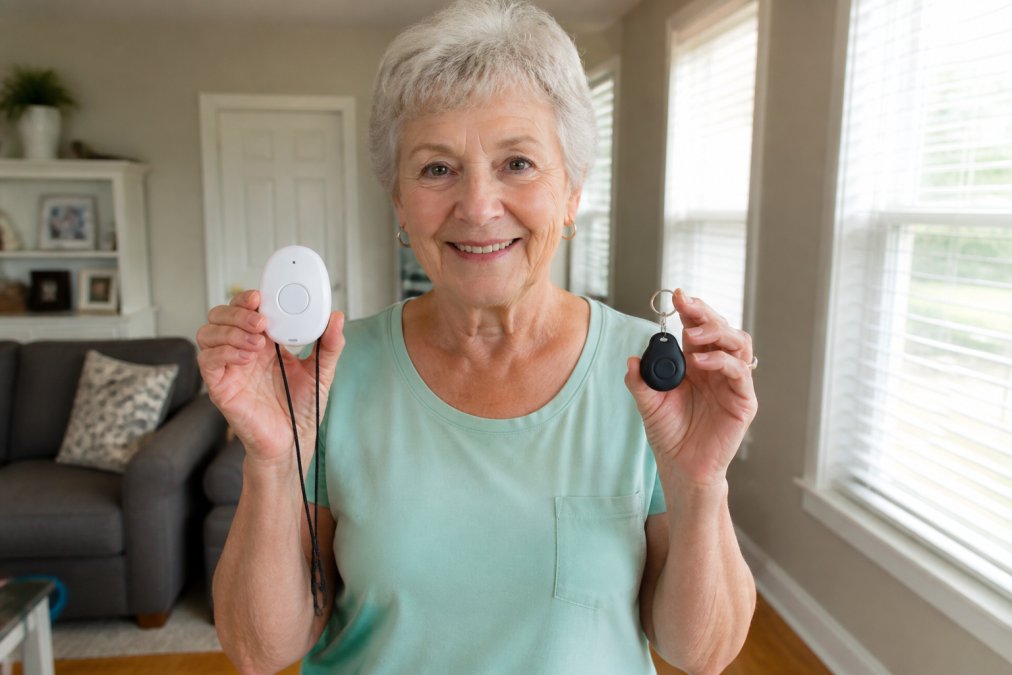
At Defense Divas Keychains, we understand the tension between cost and capability. Many customers ask whether they can get reliable personal safety without ongoing fees. The answer requires understanding what "reliable" actually means in an emergency. This guide walks you through the real options, the tradeoffs you're making with each choice, and how to pick the right one for your specific situation.
Understanding Unmonitored Medical Alert Systems
An unmonitored medical alert system connects directly to emergency services or pre-programmed contacts without routing through a professional monitoring center. Your device becomes the bridge between you and help, eliminating the intermediary operator layer that traditional services employ.
How Unmonitored Systems Differ From Professional Monitoring
Professional monitoring centers employ trained operators available 24/7 who listen to your emergency, verify your identity, and decide whether to call 911. They can relay medical information and provide reassurance while help arrives.
Unmonitored systems eliminate that human layer. A direct-to-911 pendant connects you to the 911 dispatcher immediately, with no verification delays. A family-contact alarm notifies your designated contacts instead. The speed is the advantage; the tradeoff is losing trained professional judgment and reassurance during crisis.
Whether unmonitored means less safe depends entirely on your situation. If you live alone and fall, direct-to-911 gets help faster than waiting for an operator. If you're confused or injured and can't communicate clearly, a trained operator with your medical history on file would serve you better.
Direct-to-911 vs. Family-Contact Alarms
Direct-to-911 systems connect you to emergency dispatch immediately using cellular networks (4G LTE). No monthly fee because there's no service company managing your account; you're using public emergency infrastructure. The LogicMark Guardian Alert 911 Plus includes fall detection and two-way voice communication, costing $399 upfront with no recurring expenses (logicmark.com).
Family-contact alarms notify your designated emergency contacts instead of 911. The LogicMark Freedom Alert lets you program up to four custom contacts who can then decide whether to call 911. This works best when someone nearby can respond quickly, but leaves you vulnerable if all contacts are unavailable.
How to Choose a Medical Alert System With No Contract
Start by asking whether you live alone. If yes, direct-to-911 systems make sense because they don't depend on anyone being available. Next, consider whether you're at significant fall risk. Systems without fall detection require you to press a button; if you lose consciousness, nothing happens. Finally, evaluate your support network. Do you have reliable contacts within reasonable distance who check their phones immediately?
Key Features That Matter Most
Fall detection separates premium no-fee systems from basic ones by automatically alerting help if you fall and lose consciousness. The technology occasionally misidentifies a quick sit-down as a fall, but for someone living alone at risk, the safety gain outweighs occasional inconvenience.
Two-way voice communication lets you describe your situation and the dispatcher can respond. This becomes critical if you're injured but conscious.
Water resistance is essential. Look for water-resistant designs rated for submersion, not just splash protection, since most elderly users wear their alarms in the shower.
Battery longevity determines maintenance burden. A device requiring daily charging is something you'll eventually forget to do. Systems with week-long battery life reduce that risk.
Water Resistance and Durability Considerations
A device rated for splash protection (IPX4) survives rain and dishwater. A device rated for submersion (IPX7 or IPX8) survives a shower or accidental dunking (iec.ch). Most elderly users wear their alarms in the shower, making submersion rating essential.
Test the device in your own environment before committing. Drop it from waist height on a hard floor, submerge it in a sink for 30 seconds, and press the button 50 times rapidly. These tests reveal whether the device is built to last or destined for a drawer after three months.
Medical Alert Systems With No Contract: Top Options
Direct-to-911 Systems With Fall Detection
LogicMark Guardian Alert 911 Plus connects directly to 911 using 4G LTE cellular networks and includes patented fall detection that automatically alerts emergency services if you fall and lose consciousness. Two-way voice communication lets you speak directly to the dispatcher. Water-resistant design means you can wear it in the shower. The upfront cost is $399 with zero recurring fees.
The device works anywhere with cellular coverage and requires no landline or Wi-Fi. Setup takes minutes. The fall detection learns your normal movement patterns over the first week, reducing false alarms. Real users report feeling significantly safer knowing help will come automatically if they fall.
LogicMark Freedom Alert offers a middle ground at $299. Like the Guardian Plus, it connects directly to 911 or up to four pre-programmed contacts. You choose the priority: call 911 first, or alert family members who can assess the situation. Water-resistant design supports shower use and two-way voice communication is included.
Simple Personal Alarms and Keychain Options
Guard Dog Security Personal Safety Alarm represents the entry-level no-fee approach. Press the button and it emits a 120-decibel siren designed to attract attention and scare off threats. Cost is minimal ($10-$20), the battery lasts months between uses, and it works anywhere with no service required. The limitation is obvious: it only works if someone nearby hears the alarm.
SABRE Clip-On Personal Alarm With LED Safety Light produces a 120-decibel alarm audible up to 1,300 feet and includes an LED light with three modes: steady flashlight, slow flash, and fast flash. Cost is similar ($10-$15), and the extended light range makes it useful for outdoor activities and nighttime emergencies.
Smartphone-Connected Wearables
Silent Beacon pairs with your smartphone via Bluetooth to alert pre-programmed emergency contacts or call 911 directly. GPS location tracking shows your exact position to responders. Equipment cost is $59.99, one of the lowest upfront prices for a connected system. However, it requires a smartphone to function. If you don't carry your phone or it's out of battery, the device becomes useless.
Pros and Cons: No-Fee vs. Subscription Medical Alert Systems
| Aspect | No-Fee Systems | Subscription Systems |
|---|---|---|
| Upfront Cost | $12-$399 one-time | Usually $0-$100 |
| Monthly Expense | $0 | $20-$50/month |
| Response Time | Immediate (direct-to-911) or contact-dependent | Operator-mediated (30-60 seconds) |
| Professional Assessment | None (direct-to-911) or family judgment | Trained operator evaluates situation |
| Fall Detection | Available on premium models | Included in most plans |
| Water Resistance | Varies by model | Standard feature |
| Long-Term Cost (5 years) | $12-$399 total | $1,200-$3,000 total |
The financial argument favors no-fee systems over five years. A $399 direct-to-911 device costs less than four months of a subscription service. But cost alone doesn't determine the right choice.
Subscription systems offer professional judgment during emergencies. An operator trained in medical assessment can hear confusion in your voice and dispatch additional resources. They have your medical history on file and can relay critical information to paramedics. For someone with cognitive decline or complex medical needs, this human layer provides genuine value.
No-fee systems prioritize speed and independence. If you're mentally sharp and physically able to communicate, direct-to-911 gets help faster because there's no intermediary. The tradeoff is losing the professional safety net.
False Alarm Prevention and Device Testing
False alarms plague personal alarm systems. A device that triggers every time you sit down quickly becomes background noise. Testing your system regularly prevents both false alarms and the worse problem: a real emergency where the device fails because it's never been tested.
Monthly testing protocol: Once per month, press the button in a safe location and verify the response. If it's a direct-to-911 system, you'll connect to a dispatcher; briefly explain it's a test and hang up. If it's a family-contact alarm, call whoever received the alert and confirm they got it. This monthly ritual ensures the device works and trains your muscle memory.
Fall detection calibration requires extra attention. These systems learn your movement patterns during the first week. After the learning phase, occasional false alarms are normal. If false alarms become frequent (multiple per week), recalibrate by resetting the device.
Troubleshooting false alarms: Most stem from aggressive button placement. If the device is in a pocket and gets pressed by your body during normal movement, you'll get false alarms. Use a clip or pendant that keeps the button protected. Some users tape over the button with clear tape, leaving just enough exposed to press deliberately.
Battery degradation causes another class of false alarms. As batteries age, voltage fluctuates, sometimes triggering the alert mechanism. If false alarms increase over months, replace the battery.
Battery Life, Signal Range, and Maintenance
Battery life varies dramatically between device types. Simple keychain alarms with one-year standby battery require almost no maintenance. Connected devices with active Bluetooth or cellular connections drain batteries much faster.
Direct-to-911 systems like the LogicMark Guardian Alert 911 Plus typically last 3-5 days between charges. The device includes a charging dock and alerts you when battery is low.
Smartphone-connected devices like Silent Beacon depend on both the wearable's battery and your phone's battery. The beacon itself might last 2-3 days, but if your phone dies, the system stops working.
Simple keychain alarms last longest, operating for 6-12 months on a single battery. When it dies, you buy a new alarm.
Signal range matters for connected systems. Direct-to-911 devices use cellular networks, so their range is wherever you have cell service. In rural areas with weak coverage, these systems might fail. Simple keychain alarms have unlimited range because they're self-contained.
Maintenance schedules differ by device type. Direct-to-911 systems need weekly charging during active use or monthly charging if stored, plus monthly button testing. Simple keychain alarms need almost no maintenance.
Legal Considerations and Liability
Personal alarm systems operate in a complex legal landscape that varies by state.
Liability for false 911 calls is the primary legal concern. If your device repeatedly calls 911 with false alarms, you could face fines. Some jurisdictions charge $50-$300 per false alarm after a certain threshold (often 3-5 per month) (nena.org). This is why testing and maintenance matter.
Most direct-to-911 devices include disclaimers that they're not substitutes for traditional 911 service. If the device fails to connect during an emergency, you have limited legal recourse against the manufacturer.
State-by-state variations affect which devices are legal to carry. Most simple keychain alarms are legal nationwide, but some states restrict loud noise devices in certain contexts. Before carrying a 140-decibel alarm regularly, verify your state's regulations.
Medical alert device registration varies by manufacturer. Some direct-to-911 systems require registration with local emergency services so 911 knows it's a legitimate emergency alert. Check your device's documentation for registration requirements in your area.
Personal alarms for the elderly without monthly fees solve a real problem: they provide emergency protection without the long-term cost of subscription services. Defense Divas Keychains recognizes that safety shouldn't require ongoing fees, which is why we offer stylish, reliable defense keychain options designed for everyday carry. Whether you choose a simple loud alarm for immediate attention or a connected device for direct 911 access, the key is selecting a system that matches your living situation and mobility level. Get started with Defense Divas Keychains and add a wearable safety tool that fits your personal style while keeping you protected.
Frequently Asked Questions
Q: What is the difference between monitored and unmonitored medical alert systems?
A: Monitored systems connect to a professional monitoring center that responds to emergencies, dispatches help, and contacts family members. Unmonitored systems allow direct calls to 911 or preset emergency contacts without intermediaries. Monitored systems typically charge monthly fees; unmonitored systems often have one-time costs. The trade-off: unmonitored systems are cheaper but require the user to communicate their emergency themselves or rely on family to respond.
Q: Can a personal alarm for the elderly without a monthly fee actually call 911?
A: Yes. Direct-to-911 personal alarms use cellular connectivity to place emergency calls without a subscription. Examples include LogicMark Guardian Alert 911 Plus and SkyAngel911, which have one-time purchase prices and no recurring fees. These devices dial 911 with a button press, and the user speaks directly to the dispatcher. However, they do not alert family members automatically unless the user programs them to call specific contacts instead.
Q: How do I choose a medical alert system with no contract that fits my lifestyle?
A: Start by identifying your primary need: fall detection (choose systems with patented fall detection), simplicity (choose one-button alarms), or smartphone integration (choose wearables that sync to your phone). Next, consider water resistance if you shower or spend time outdoors. Check battery life and signal range for your typical activities. Finally, decide whether you want direct-to-911 calling or the ability to alert family first. Test the device in your hand to ensure it feels substantial and reliable before committing.
Q: Are non-monitored medical alert systems reliable in a real emergency?
A: Non-monitored systems are reliable for their specific function: placing a call or alert. However, they depend on the user remaining conscious and able to press a button, and they assume someone will answer or respond. Fall detection can trigger automatically, but it is not 100 percent accurate and sometimes triggers false alarms. The real risk is silence: if no one hears the alarm or answers the call, help may not arrive. This is why many users pair them with family notifications or keep them in environments where others are present.