

Table of Contents
- Situational Awareness: The Foundation of Personal Safety
- Walking and Pedestrian Safety Examples
- Personal Safety Tools for College Students
- Home Security and Vehicle Safety Examples
- Digital Personal Safety and Privacy
- De-Escalation and Psychological Safety
- Public Transport and Emergency Preparedness
- What to Do After an Incident
Last Updated: August 25, 2026
Personal safety combines awareness, preparation, and practical tools. Whether commuting through the city, living on campus, or traveling alone, understanding personal safety examples helps you build protective habits. At Defense Divas Keychains, we've helped people recognize the gap between feeling safe and actually being safe, a difference that often comes down to knowing what to watch for, having the right tools within reach, and trusting your instincts.
This guide covers 12 practical personal safety examples across different scenarios, from situational awareness to digital protection and incident response. You'll find actionable strategies to implement today, along with tools designed for both style and substance.
Situational Awareness: The Foundation of Personal Safety
Situational awareness is your first line of defense. It means actively observing your environment, noticing patterns, and recognizing when something breaks that pattern.
Reading Your Surroundings
When you enter a space, take 10 seconds to scan: Who's here? Where are the exits? What stands out as unusual? This is the same assessment a security professional makes. Notice patterns in foot traffic and recognize when someone's pace matches yours or they're checking their phone without actually looking at it.
Pay attention without being obvious. Use reflections in windows to see who's behind you. Check mirrors in parking lots before approaching your vehicle. You're most at-risk when distracted, headphones in both ears, eyes on your phone, hands full of bags all reduce your ability to notice threats and respond quickly. Keep one ear free and hold your phone at chest level rather than extended in front of you.
Trusting Your Instincts
Your instincts are data your conscious mind hasn't fully processed. If someone makes you uncomfortable, that feeling exists for a reason. Ignoring your gut to be polite is a dangerous trade-off. You don't owe anyone your comfort or your time.
Research on assault and robbery shows victims often ignored early warning signs because they didn't want to be rude (peer-reviewed research). Take seriously: someone standing too close in a non-crowded space, inconsistent eye contact, someone mirroring your movements, personal questions, or disrespect for your "no." These are flags worth acting on.

Walking and Pedestrian Safety Examples
Walk with purpose and confidence. Your body language communicates awareness. Keep your head up, shoulders back, and maintain a steady pace. If you need to check directions, step into a store or well-lit area rather than stopping on the street.
Vary your routine. If you walk the same route at the same time daily, you become predictable. Change your schedule occasionally and use different streets. Stay in well-lit, populated areas whenever possible. Avoid shortcuts through empty parking lots, alleys, or parks, especially at night. Let someone know your route and expected arrival time.
Keep your hands free and accessible. Multiple shopping bags or hands in pockets limit your ability to react quickly. Use a backpack or crossbody bag instead. Stay alert at transit stops. Don't sit with your back to the entrance. Keep your bag close and valuables out of sight. A firm "no" to someone approaching you is a complete response.
Personal Safety Tools for College Students
College students face unique safety challenges in unfamiliar environments and vulnerable times. Practical personal safety examples combine awareness with accessible tools.
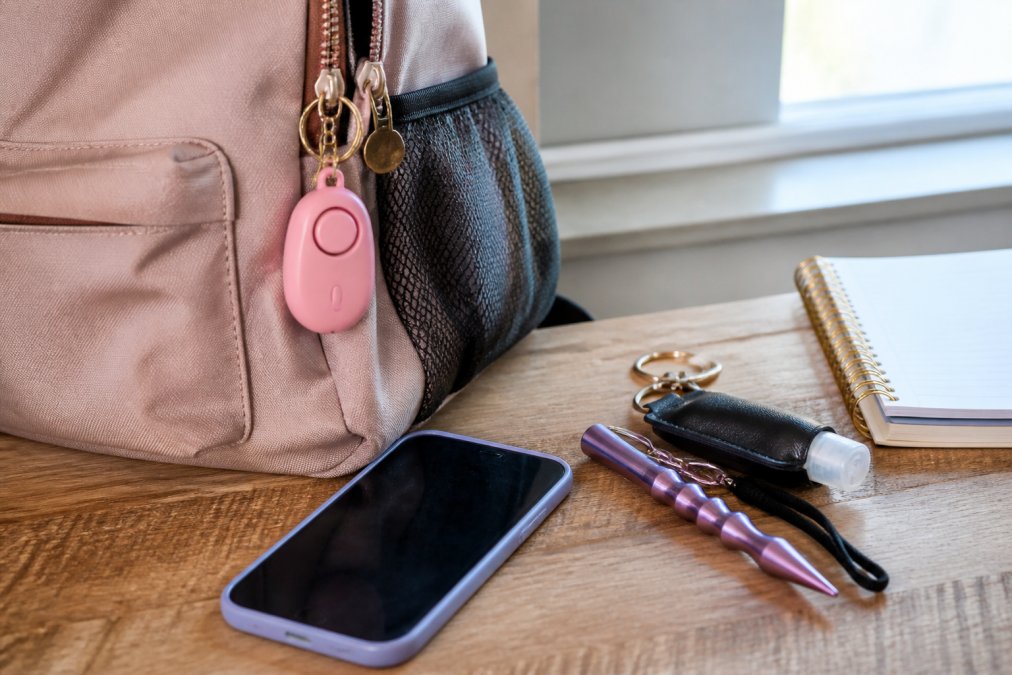
Portable Alarms and Keychains
A personal alarm is one of the most straightforward personal safety examples. These devices emit a loud siren (typically 130-140 decibels) designed to startle an attacker and draw attention from others nearby (peer-reviewed research).
She's Birdie Personal Safety Alarm is designed to be stylish and discreet, with a 130-decibel siren activated by pulling a pin. It's travel-approved and available in multiple colors at around $9.97-$24.95. Kosin Safe Sound Personal Alarm offers similar functionality at around $9.99-$25.24 for multi-packs, with a 140-decibel alarm and LED flashlight. Defense Divas Keychains offers stylish options that combine safety with fashion, with preorder exclusives for early access to new designs.
Keychain alarms are effective because they're small enough to always have with you, attached to your keys, bag, or pocket. They require no training and work in seconds.
Self-Defense Spray and Tactical Tools
Pepper spray and gel options provide distance between you and a threat. SABRE Pepper Gel and Spray Home and Away Protection Kit is designed for both indoor and outdoor use. The gel formula minimizes blowback indoors and includes 17 bursts with a 17-foot range for gel and 25 bursts with a a 10-foot range for spray, plus UV marking dye. This kit is available for around $19.99-$49.99.
POM Pepper Spray Original is a compact personal carrying unit. Before buying, verify what's legal in your state and on your college campus, many campuses prohibit pepper spray in dorms.
Tactical pens like The Atomic Bear Stealth Pen Pro serve double duty as writing instruments and self-defense tools. Made from aircraft-grade aluminum with a tungsten steel glass breaker, they're discreet enough for a backpack or pocket at around $49.99.
Mobile Apps and Emergency Sharing
Google Personal Safety App offers features specifically useful for college students. Emergency Sharing automatically sends your real-time location and critical information to emergency contacts. The Safety Check feature sets a timer; if you don't confirm you're safe when prompted, it automatically initiates Emergency Sharing. For Pixel phone users, car crash detection automatically calls emergency services after a crash. The app is free and integrates with Google Assistant for hands-free use.
Home Security and Vehicle Safety Examples
Your home and vehicle are spaces where you should feel secure. Start with basics: lock doors and windows, even when home. Install motion-sensor lighting outside your front door. Use a door wedge or portable door lock if renting. SimpliSafe Wireless Home Security System offers DIY installation with customizable components. Equipment packages range from around $250 to $730, and professional monitoring plans are available from about $23 to $80 per month, or you can opt for self-monitoring with camera recordings for around $9.99 per month.
For vehicles, never leave your car running unattended. Lock doors immediately after entering. Park in well-lit areas near building entrances. Scan the area before approaching your car. Keep valuables out of sight, place items in the trunk or cover them.
Digital Personal Safety and Privacy
Use privacy settings on social media. Avoid posting your location in real-time or sharing that you're away from home. Post about trips after you return, not while traveling.
Be cautious with dating apps. Meet first dates in public places and tell a friend where you're going. Video chat before meeting in person. Trust your instincts about profiles that seem off, deleted messages, or pressure to move conversations off the app.
Use strong, unique passwords for important accounts and enable two-factor authentication. Know which apps have location permission and turn off location services when not needed.
De-Escalation and Psychological Safety
If someone approaches aggressively, stay calm and speak in a steady, low voice. Don't match their energy. Use phrases like "I understand you're upset" to acknowledge emotion without agreeing with demands.
Create distance by stepping back slowly without sudden movements. Keep your hands visible and open. If someone harasses you verbally, a firm "I'm not interested" combined with walking away is complete. You don't owe explanation or conversation.
Recognize when de-escalation won't work. If someone escalates despite your attempts, your priority is escape. Leave the situation, run toward people and lights, and call for help.
Public Transport and Emergency Preparedness
On public transit, sit near the driver if possible. Avoid empty cars or sitting alone. Stay alert and don't become absorbed in your phone. If someone is behaving erratically, move cars or get off at the next stop.
For rideshares, verify the driver's name and photo before getting in. Share your trip details with a friend and sit in the back seat. If something feels wrong, cancel the ride.
Keep emergency contacts easily accessible. Program important numbers into your phone and know where the nearest police station or hospital is in areas you frequent.
What to Do After an Incident
If you experience harassment, assault, or a threatening situation, your first priority is safety. Get to a safe location and call 911 if in immediate danger.
After immediate danger passes, consider reporting the incident to local police if it involved a crime, or to your college or employer if it happened on their property. Document what happened while fresh: date, time, location, description of the person, what they said or did, and any witnesses.
Seek support through crisis hotlines or victim advocacy services. Preserve evidence if possible, don't shower or change clothes immediately if there was physical contact. Remember: an incident is not your fault. Personal safety tools reduce risk but don't guarantee prevention. Responsibility lies with the person who caused harm, not with you.
Personal safety is an ongoing practice, not a destination. The examples covered here work together to create a foundation of protection. Defense Divas Keychains recognizes that safety doesn't require sacrificing style. With stylish keychain options, preorder exclusives, and personalized service, you can build your personal safety toolkit while expressing your individual style. Start with one or two practices this week and build from there. The goal isn't to live in fear; it's to move through the world with confidence and awareness.
=== FAQ ANSWERS (audit these too, same rules) ===
[1] Q: What are the most effective personal safety examples I can use daily? A: The most effective personal safety examples combine awareness and action. Stay alert to your surroundings, trust your instincts when something feels off, vary your routines to avoid predictability, keep emergency contacts saved in your phone, and carry a personal alarm or defense tool. For college students, adding a location-sharing app and practicing de-escalation techniques creates multiple layers of protection. Consistency matters more than any single tool.
[2] Q: How do situational awareness techniques help prevent danger? A: Situational awareness techniques train you to notice threats before they escalate. By observing body language, monitoring exits, identifying suspicious activity, and maintaining alertness to your environment, you can often avoid dangerous situations entirely. This mindset helps you make better decisions about which routes to take, who to trust, and when to remove yourself from a location. Research shows that predators target people who appear unaware, making visibility and confidence powerful deterrents (peer-reviewed research).
[3] Q: Are personal safety tools for college students actually effective, or just confidence builders? A: Quality personal safety tools serve both purposes. A 130-decibel alarm draws immediate attention from bystanders and can disorient an attacker, while pepper spray causes temporary incapacitation. However, tools work best alongside awareness and de-escalation skills. The confidence they provide is itself valuable because confident body language and eye contact discourage many potential threats. Tools are most effective when you've practiced using them and understand their limitations.
[4] Q: What should I do immediately after a threatening incident? A: First, move to safety and call emergency services if needed. Once secure, document what happened while details are fresh: descriptions of the person, exact location, time, and any witnesses. Save any evidence like photos or messages. Report the incident to relevant authorities and your organization (workplace, school, etc.). Contact a trusted friend or family member for support. Consider counseling or victim services, which many communities offer. Reporting helps prevent future incidents and creates a record for your safety.
Frequently Asked Questions
Q: What are the most effective personal safety examples I can use daily?
A: The most effective personal safety examples combine awareness and action. Stay alert to your surroundings, trust your instincts when something feels off, vary your routines to avoid predictability, keep emergency contacts saved in your phone, and carry a personal alarm or defense tool. For college students, adding a location-sharing app and practicing de-escalation techniques creates multiple layers of protection. Consistency matters more than any single tool.
Q: How do situational awareness techniques help prevent danger?
A: Situational awareness techniques train you to notice threats before they escalate. By observing body language, monitoring exits, identifying suspicious activity, and maintaining alertness to your environment, you can often avoid dangerous situations entirely. This mindset helps you make better decisions about which routes to take, who to trust, and when to remove yourself from a location. Research shows that predators target people who appear unaware, making visibility and confidence powerful deterrents.
Q: Are personal safety tools for college students actually effective, or just confidence builders?
A: Quality personal safety tools serve both purposes. A 130-decibel alarm draws immediate attention from bystanders and can disorient an attacker, while pepper spray causes temporary incapacitation. However, tools work best alongside awareness and de-escalation skills. The confidence they provide is itself valuable because confident body language and eye contact discourage many potential threats. Tools are most effective when you've practiced using them and understand their limitations.
Q: What should I do immediately after a threatening incident?
A: First, move to safety and call emergency services if needed. Once secure, document what happened while details are fresh: descriptions of the person, exact location, time, and any witnesses. Save any evidence like photos or messages. Report the incident to relevant authorities and your organization (workplace, school, etc.). Contact a trusted friend or family member for support. Consider counseling or victim services, which many communities offer. Reporting helps prevent future incidents and creates a record for your safety.