

Table of Contents
- Personal Safety Tools Every College Student Should Own
- Dorm Room Security Devices That Actually Work
- Pepper Spray Laws by State: What Students Must Know Before Buying
- Campus Safety Apps for Students: Digital Tools That Back You Up
- College Campus Safety Tips: Situational Awareness and Night Safety
- Safety Checklist for College Freshmen: Build Your Kit on Any Budget
- Choosing Personal Safety Tools That Fit Your Style and Daily Routine
- Conclusion
Last Updated: August 9, 2026
Personal Safety Tools Every College Student Should Own
Personal safety tools for college students have become essential, not an afterthought. At Defense Divas Keychains, we work with students who want protection that fits their life, not clunky gear left at home. The best personal safety setup is smaller, more stylish, and more effective than most expect.
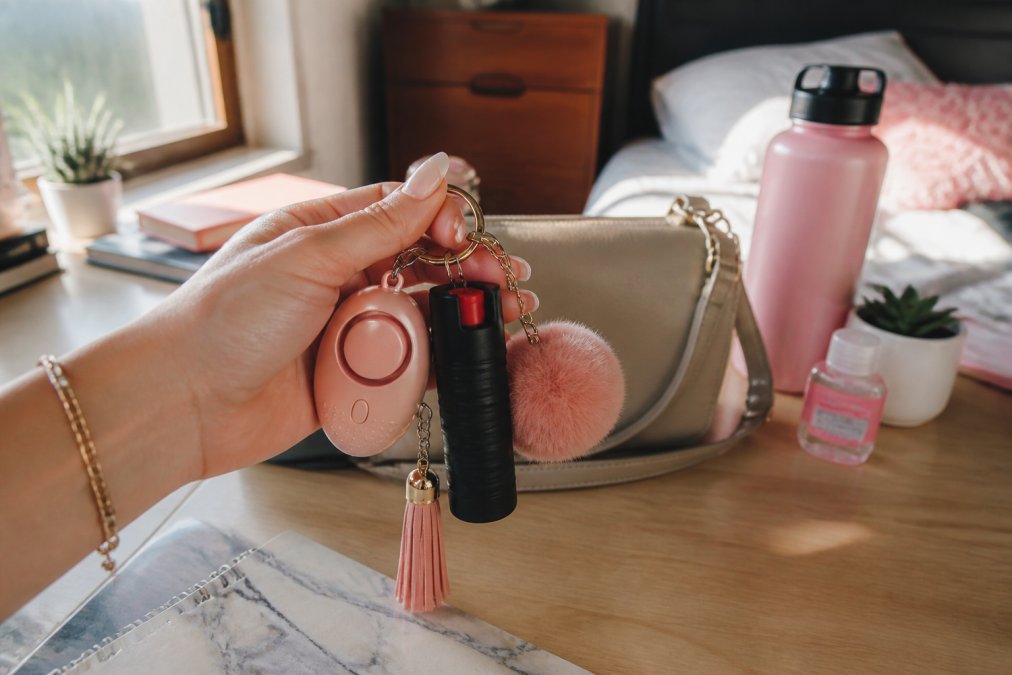
A practical safety kit starts with three core categories: audible deterrents, chemical deterrents, and visibility tools. Each addresses different threat scenarios.
Personal Emergency Alarms
A personal emergency alarm requires zero training, works regardless of physical strength, and draws attention instantly when calling 911 isn't fast enough.
The Birdie Personal Safety Alarm produces a 130dB siren paired with a flashing strobe light and charges via USB-C. The Safe Sound Personal Alarm reaches up to 145dB and is audible 600 feet away. Look for pull-pin activation, you shouldn't fumble with buttons under stress.
Pepper Spray and Pepper Gel
Pepper spray is widely carried on college campuses because it creates immediate physical incapacitation without close contact. Pepper gel is a newer format that fires in a stream sticking to an attacker's face, reducing wind blow-back risk.
The Mace Brand Pepper Gel Magnum 3 carries maximum-strength OC formula and reaches up to 20 feet. The SABRE Pepper Spray with Quick Release Keychain is compact with a flip-top safety mechanism and UV marking dye.
Pepper spray legality varies by state and campus policy. Always verify both before purchasing.
Tactical Flashlights and High-Visibility Gear
A tactical flashlight serves dual duty as a navigation tool and deterrent. A bright beam can disorient an approaching threat and signal awareness, often enough to deter opportunistic threats.
High-visibility gear matters most when running, cycling, or walking near traffic at night. Reflective clip-ons and LED armbands are inexpensive and effective. The combination of a tactical flashlight and reflective gear is one of the most overlooked elements of complete personal safety.
Dorm Room Security Devices That Actually Work
Most students focus on what they carry, ignoring their most vulnerable place: their own room. Dorm room safety solutions are cheap, portable, and require no landlord permission.
Portable Door Locks
A portable door lock is the highest-impact dorm room security upgrade available. The Addalock Portable Door Lock installs in seconds on any inward-opening hinged door and prevents opening from outside even with a key. It's made from heavy-duty steel, costs less than a campus meal plan swipe, and is TSA-friendly for travel.
Compact Security Cameras for Dorms and Off-Campus Apartments
Off-campus housing introduces risks dorms don't have: unknown neighbors, shared entryways, and unresponsive landlords. A compact security camera provides documentation and deterrence.
The Wyze Cam v3 offers 1080p HD video with color night vision, two-way audio, and local microSD storage at low cost. It requires wired power, limiting placement options. The Arlo Go 2 offers 4G LTE connectivity, a built-in siren, and rechargeable battery for wire-free placement at higher cost.
According to the National Crime Prevention Council's campus safety resources, visible security devices are among the most effective deterrents against opportunistic property crime.
Pepper Spray Laws by State: What Students Must Know Before Buying
Pepper spray laws by state are not uniform. Assuming your home state's rules apply at your college location is a mistake that can result in confiscation, fines, or worse.
Pepper spray is a regulated item in the United States. Most states permit it for personal protection with restrictions on concentration, canister size, and purchaser age. Some impose stricter rules. Campus policies add another layer: some universities ban pepper spray in dorms even where state law permits it.
| State Category | Common Restrictions | Action Required |
|---|---|---|
| Permissive states | Age 18+, no felony record | Verify campus policy separately |
| Restricted states | Size/concentration limits, permit required | Check state AG website before purchasing |
| Campus-specific bans | Prohibited in dorms or on campus regardless of state law | Email campus security or housing office |
| Travel situations | TSA prohibits pepper spray in carry-on luggage | Pack in checked baggage only |
The U.S. Department of Transportation's hazardous materials regulations for passengers governs what you can bring on a plane. Pepper spray is permitted in checked baggage in limited quantities. Carry-on is prohibited.
For state-specific regulations, check your state attorney general's website directly.
Campus Safety Apps for Students: Digital Tools That Back You Up
Campus safety apps fill a gap physical tools can't: they connect you to help when you can't speak, share your location when moving, and build a network of people who know where you are.
A campus safety app uses your smartphone's GPS and communication capabilities to summon help, share location, or alert trusted contacts in an emergency.
Noonlight operates on a hold-and-release model. Hold the button while unsafe. Release without entering your PIN and it dispatches emergency services to your exact GPS location, even if unable to speak. It integrates with Uber, Lyft, and Apple Watch on paid tiers. The free version covers core emergency response.
Circle of 6 focuses on peer support rather than emergency dispatch. Designate six trusted contacts who receive pre-programmed messages like "come get me" with your GPS location. It's free and discreet, particularly effective in social situations where you need an exit rather than a 911 call.
Most campuses have their own safety apps with features like virtual escorts and direct lines to campus police.
College Campus Safety Tips: Situational Awareness and Night Safety
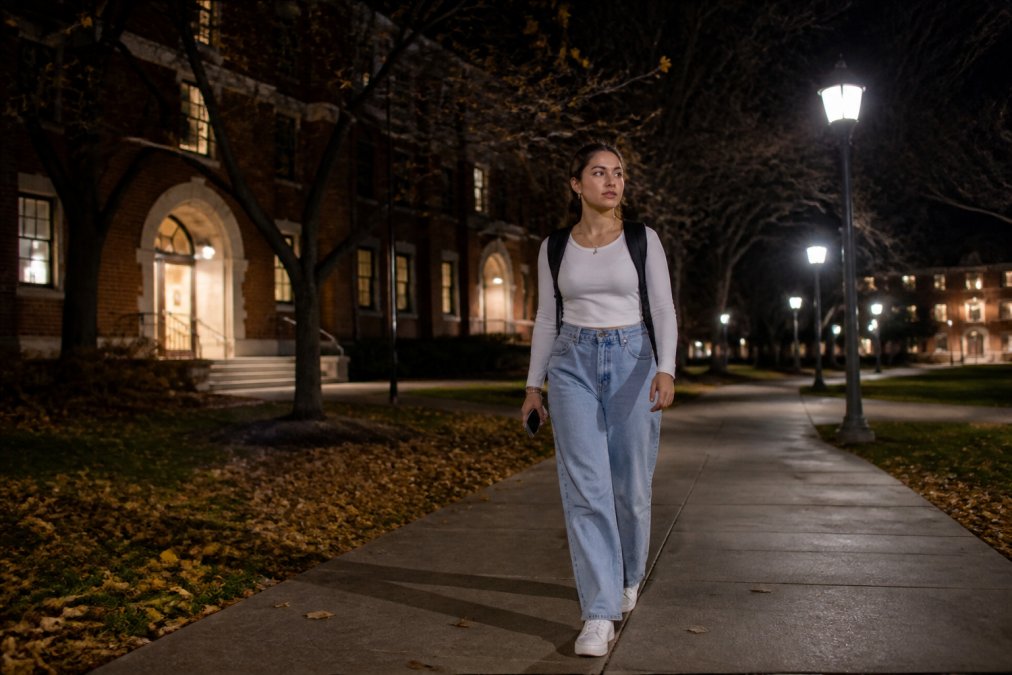
The most effective personal safety tool is situational awareness, continuously reading your environment to identify potential threats before they materialize.
Psychological Preparation: Thinking Before a Threat Happens
Most people think about safety reactively. The more effective approach is threat assessment before situations arise: identify two exits before sitting in a lecture hall, note who's around when leaving the library at 11pm, and trust discomfort as data.
According to the U.S. Department of Justice's campus crime resources, most campus crimes are opportunistic rather than targeted. The primary risk mitigation strategy is not looking like an easy target. Walk with purpose. Keep your phone in your pocket. Make brief eye contact with people you pass, signaling awareness rather than vulnerability.
Common mistakes students make:
- Wearing both earbuds at full volume while walking alone at night
- Posting real-time location updates on social media before arriving
- Assuming campus areas are uniformly safe regardless of time or lighting
- Carrying safety tools at the bottom of a bag where they're inaccessible
Campus Escort Services and Walk-Home Programs
Campus walk-home programs are underused safety resources. Most mid-size and large universities offer free escort services, often staffed by trained student volunteers or campus security, that will walk or drive you anywhere on campus after dark.
The barrier is usually social, not logistical. Using these programs is a smart choice. Find your campus escort service number before you need it and save it in your phone contacts.
Safety Checklist for College Freshmen: Build Your Kit on Any Budget
A safety checklist for college freshmen should be practical, not overwhelming. Prioritize tools covering the most likely scenarios first, then add layers as budget allows.
Budget-Friendly DIY Safety Kit
| Item | Purpose | Priority |
|---|---|---|
| Personal emergency alarm | Audible deterrent, draw attention | Must-have |
| Portable door lock | Dorm room security | Must-have |
| Pepper spray or gel (where legal) | Non-lethal physical deterrent | High |
| Safety app (Noonlight or Circle of 6) | Emergency dispatch / peer network | High (free) |
| Tactical flashlight | Night visibility and deterrence | Medium |
| High-visibility clip or armband | Traffic safety, night running | Medium |
| Compact security camera | Off-campus housing monitoring | Optional |
Start with a personal alarm and portable door lock. They address the two highest-frequency risk scenarios for freshmen: being approached while walking and unauthorized room entry. Add pepper spray once you've confirmed it's legal in your state and permitted by your campus.
Choosing Personal Safety Tools That Fit Your Style and Daily Routine
The most effective personal safety tool is the one you actually carry. A keychain set that matches your bag, fits your aesthetic, and feels like a natural extension of what you already carry is one you'll have when it matters.
Ask about any personal safety tool: will I actually have this on me at 10pm on a Tuesday when walking back from the library? If the answer is "probably not," it's the wrong tool for your routine, regardless of specs.
Real-world considerations:
- Keychain tools work for people who always carry keys. If you use a fob or phone as your building key, build your kit around your bag.
- Wearable alarms that clip to clothing or bag straps work for people who frequently switch bags.
- Pepper gel is better than spray for students in windy climates or who spend time outdoors.
- Safety apps are only useful if your phone is charged. Build phone charging into your daily routine.
The goal is a personal safety protocol that runs in the background of your daily life, not one requiring constant conscious effort. Start small, build the habit, then add layers.
Frequently Asked Questions
What are the best personal safety devices for college students?
The most practical personal safety tools for college students combine portability with real deterrent value. A loud personal emergency alarm (130-145dB) is legal everywhere and draws immediate attention. Pepper gel offers a non-lethal defense option with longer range and less blowback than traditional spray. A portable door lock adds a layer of dorm room security no standard lock provides. Pairing these with a safety app like Noonlight creates a layered approach that covers both physical and digital safety.
Are pepper sprays legal on all US college campuses?
No. Pepper spray laws by state vary significantly, and many campuses add their own restrictions on top of state law. Some states cap canister size or OC concentration. Certain universities ban pepper spray in dorms entirely, regardless of state law. Before purchasing, check your state's statutes and your school's student conduct code. If your campus prohibits it, a personal alarm or safety app provides a legal alternative that still supports your personal protection.
What safety apps should every college student have?
Two apps stand out for campus safety. Noonlight connects directly to 911 dispatchers with your GPS location if you release its hold button without entering your PIN, useful when you cannot speak. Circle of 6 lets you alert up to six trusted contacts with one tap, sharing your location and pre-written messages. Both work as digital complements to physical personal safety tools, and Noonlight's basic tier is free. Many campus safety apps also integrate with university emergency notification systems.
What should be included in a college student's safety kit?
A solid safety checklist for college freshmen covers four layers: a personal emergency alarm on your keychain, pepper spray or pepper gel (where legal on your campus), a portable door lock for your dorm room, and at least one safety app installed and set up before move-in day. Adding a tactical flashlight and high-visibility gear for night walks rounds out the kit. Prices for most items are modest, so assembling a complete kit does not require a large budget.
Will a keychain alarm actually stop an attacker?
A personal emergency alarm works as a deterrent and attention-getter, not a physical barrier. A 130-145dB audible alarm startles an attacker, draws bystander attention, and can create enough time to escape. Studies on crime deterrence consistently show that noise and visibility reduce the likelihood a threat escalates. For that reason, alarms work best as part of a layered approach alongside situational awareness, a safety app, and knowing your campus escort service options.
Are stun guns allowed on university campuses?
Stun gun and TASER regulations vary by state and by individual institution. Several states restrict civilian ownership entirely, and most universities that permit pepper spray still prohibit stun guns on campus property. Always check both your state's statutes and your university's weapons policy before purchasing any electroshock device. If stun guns are restricted where you study, personal alarms and pepper gel (where permitted) remain effective, fully legal alternatives for non-lethal defense.
Staying safe on campus starts with having the right tools within reach. Defense Divas Keychains offers stylish keychain safety sets designed to fit seamlessly into your everyday carry, so your personal safety tools are always with you, not sitting at home. Visit defensedivas.shop to find a set that fits your style and your life.