

Table of Contents
- Why Self Defense Accessories Belong on Every Campus Keychain
- 5 Stylish Self Defense Accessories for College Students
- Legal Self-Defense Tools for College Students: What You Need to Know Before You Buy
- How to Use Pepper Spray Effectively in a Real Situation
- Campus Safety Tips for Students: Building Habits That Actually Protect You
- Building a Budget-Friendly DIY Campus Safety Kit
- Conclusion
Last Updated: August 8, 2026
Why Self Defense Accessories Belong on Every Campus Keychain
Campus safety is a genuine concern for students, and the tools you carry daily can make a real difference. The best tool is the one you have on you, a personal alarm buried in your backpack offers zero protection. Style ensures you'll actually carry your gear.
Self defense accessories are personal safety tools designed to deter, distract, or incapacitate a potential attacker, giving you time to escape. According to the Bureau of Justice Statistics crime victimization data, young adults aged 18-24 experience higher rates of violent victimization than any other age group. Awareness and preparation dramatically shift those odds.
5 Stylish Self Defense Accessories for College Students
This guide covers five self defense accessories for college students who want real protection without sacrificing personal style. Each item is legal in most states, practical for everyday carry, and designed to integrate into your existing bag, keychain, or outfit.
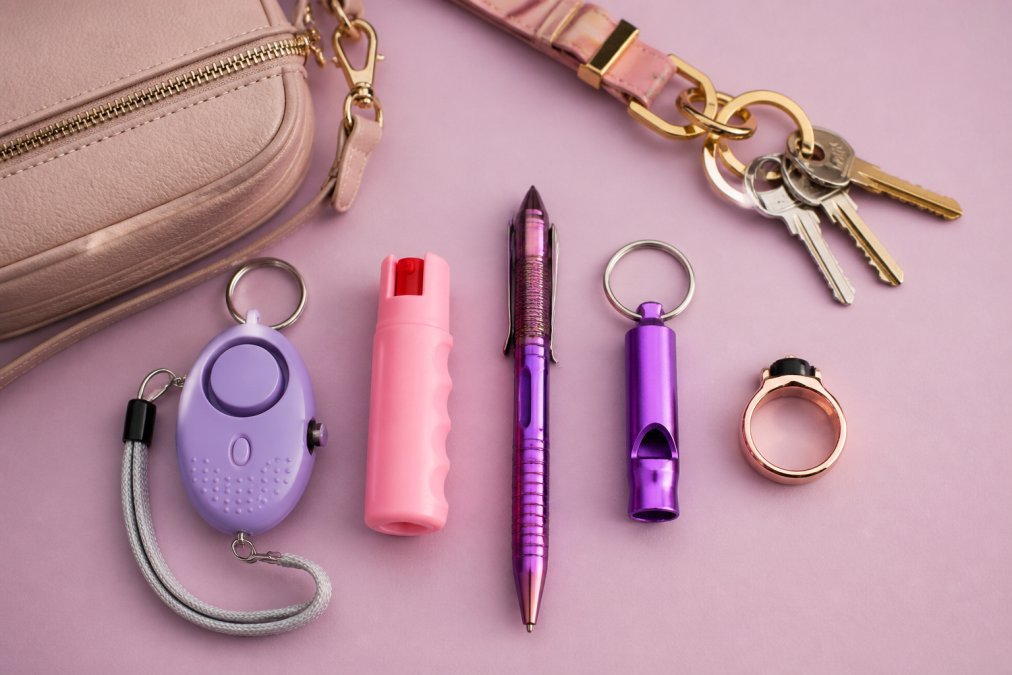
Quick Picks:
- Best Overall: Personal Safety Alarm with LED Flashlight, universally legal, zero training required
- Best Deterrent: Pepper Spray in a Fashion-Forward Case, most effective non-lethal option
- Best Wearable: Self-Defense Ring or Strike Tool, always on your hand, always ready
- Best Everyday Carry: Tactical Pen, functions as a real pen, doubles as a strike tool
- Best Budget Add-On: Safety Whistle Keychain Set, loudest tool per dollar spent
1. Personal Safety Alarm with LED Flashlight
A personal alarm is the most universally accessible self defense accessory a college student can carry. It requires zero training, is legal in all 50 states, and a 120-130dB siren is audible over a block away. The primary function is to attract attention and disrupt an attacker's plan.
The SABRE Personal Alarm with LED Light emits a 120-130dB siren audible up to 1,250 feet, includes an LED flashlight with multiple modes, and attaches directly to a keychain via a clip. Activation takes less than a second with a pull-pin design.
What to look for:
- Siren output of at least 120dB
- Pull-pin or button activation
- Integrated LED flashlight for low-light situations
- Keychain or clip attachment for rapid deployment
2. Pepper Spray in a Fashion-Forward Case
Pepper spray is the most widely used non-lethal self-defense tool in the country. It creates immediate, involuntary incapacitation through intense burning of the eyes, nose, and throat, giving you time to escape. Look for products listing Major Capsaicinoids (MC) concentration, as this measures actual stopping power.
BlingSting pepper spray combines fashion-forward design with maximum-strength protection. The rhinestone casing makes it look like a regular keychain accessory. Inside: a 1.4% MC, 10% OC formula with a stream pattern reaching 10-12 feet and invisible UV dye that marks an attacker for identification.
Honest trade-offs:
- Pepper spray legality varies by state and campus policy
- Requires direct aim and practice to deploy accurately under stress
- Wind can affect accuracy outdoors
3. Wearable Strike Tool or Self-Defense Ring
Most self defense accessories live in your bag. This one lives on your hand and is always deployed, there's no reaching, fumbling, or activation step.
The Go Guarded Self-Defense Ring is made from heavy-duty glass-reinforced nylon with sharp, serrated edges and a colorful silicone cover that flexes on impact. Five silicone size adjusters fit any finger. From a distance, it looks like an unusual ring. Up close, it's a serious strike tool. For runners and walkers, a wearable strike tool is worth serious consideration as a primary everyday carry item.
4. Tactical Pen with Everyday Carry Appeal
A tactical pen is a writing instrument built from aircraft-grade aluminum with a pointed strike end designed as a self-defense tool. The reason it belongs on this list is simple: you carry a pen anyway. This one doubles as personal protection.
A tactical pen passes casual inspection as a regular pen, goes through most security checkpoints without issue, works in any weather, and requires no battery. For students who travel frequently or live in environments with strict campus policies, a tactical pen is often the most practical option.
Look for aircraft-grade aluminum or titanium body, hardened steel or tungsten carbide strike tip, and grip texture that prevents slipping under stress.
5. Safety Whistle and Keychain Set
A safety whistle is the most underrated self defense accessory on this list. A quality whistle produces 100-120dB of sound that carries further than most personal alarms in open outdoor environments. It requires no battery, charging, or activation mechanism and cannot malfunction.
The best versions attach directly to a keychain alongside other accessories. Many safety whistle sets come with multiple whistles, so you can keep one on your keys, one on your backpack, and one in your gym bag. A whistle is most effective for attracting help in crowded environments: parking garages, campus paths, and public transit.
| Accessory | Primary Function | Legal in All States | Training Required | Best Pairing |
|---|---|---|---|---|
| Personal Alarm + LED | Audible deterrent, visibility | Yes | No | Pepper spray |
| Pepper Spray (fashion case) | Non-lethal incapacitation | No (varies) | Minimal | Personal alarm |
| Self-Defense Ring | Close-range strike tool | Mostly yes | Minimal | Personal alarm |
| Tactical Pen | Strike tool, everyday utility | Yes | Recommended | Personal alarm |
| Safety Whistle Keychain | Audible distress signal | Yes | No | Any of the above |
Legal Self-Defense Tools for College Students: What You Need to Know Before You Buy
Legal self-defense tools exist in a patchwork of overlapping rules: federal law, state law, and individual campus policy can all apply simultaneously. Understanding this before you buy saves you from carrying something that could get you expelled or fined.
State Laws and Campus Policies That Affect Your Choices
Pepper spray is legal for civilian use in all 50 states, but many states impose restrictions on concentration, container size, or age of purchase. Campus policy adds another layer. Many universities prohibit pepper spray, stun guns, and certain knives on campus grounds, regardless of state law. Violating campus policy is a disciplinary matter that can include suspension or expulsion. Check your student handbook or campus security office directly.
Stun guns and TASERs are prohibited in most states and almost universally restricted on campuses. Personal alarms, tactical pens, and safety whistles face the fewest restrictions across the board.
Practical takeaway: Personal alarms and safety whistles are universally legal and campus-friendly. Pepper spray and strike tools require a state and campus policy check before purchase.
TSA Rules and Traveling With Your Safety Kit
Pepper spray is prohibited in carry-on bags but permitted in checked luggage under specific conditions, including a maximum 4 fl. oz. container and a safety mechanism preventing accidental discharge. According to TSA prohibited items list, stun guns and TASERs are also prohibited in carry-on bags but may be transported in checked luggage when properly declared.
Tactical pens and personal alarms generally pass TSA screening without issue. Safety whistles present no issues at all.
How to Use Pepper Spray Effectively in a Real Situation
Using pepper spray effectively comes down to three things: access, aim, and distance. Most people who carry pepper spray have never practiced deploying it under stress, which is the biggest gap between owning it and using it.
Access: Your pepper spray needs to be reachable in under three seconds, on your keychain, clipped to a bag strap, or in a dedicated exterior pocket.
Aim: Target the face, specifically the eyes and nose. A stream pattern requires more accurate aim but reduces blowback risk outdoors.
Distance: Most keychain pepper sprays are effective at 6-12 feet. Closer than 6 feet and you risk blowback. Further than 12 feet and the spray disperses.
Practice the draw until it's automatic. Muscle memory is the difference between a tool you can use under stress and one you fumble.
Campus Safety Tips for Students: Building Habits That Actually Protect You
The most effective campus safety strategy isn't any single accessory, it's a set of daily habits that reduce your exposure to risk before a threat materializes. Self defense accessories are the last line. Situational awareness and smart routines are the first.
Situational Awareness as Your First Line of Defense
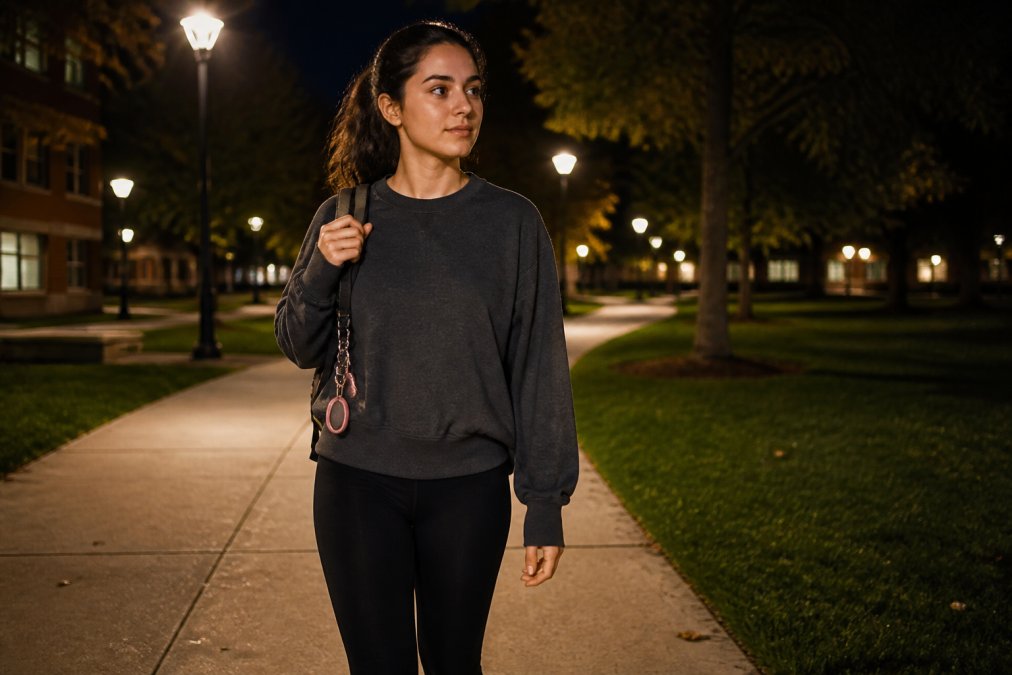
Situational awareness means continuously monitoring your environment to identify potential threats before they escalate. Put your phone away when walking alone at night, take your earbuds out in parking garages, and trust your instincts when something feels off.
Attackers select targets based on perceived vulnerability. Walking with purpose, making brief eye contact, and being visibly aware of your surroundings changes the threat assessment a potential attacker makes about you. Keep your head up, keep your hands accessible, and make sure your safety tools are visible on your bag.
Integrating Mobile Technology Into Your Safety Routine
Your smartphone is one of the most underused safety tools you carry. A practical mobile safety routine for college students includes sharing your live location with a trusted contact when walking alone at night, saving your campus security number as a contact, enabling emergency SOS on your phone, and using a panic button app that connects to your emergency contact list.
The integration of mobile technology with physical self defense accessories creates a layered safety system. Your alarm attracts immediate attention. Your phone calls for help and documents your location.
Building a Budget-Friendly DIY Campus Safety Kit
A complete campus safety kit doesn't require a large budget. The goal is layered protection: one tool for audible deterrence, one for physical deterrence, and one for communication.
A practical three-tier kit:
- Tier 1, Audible: Safety whistle keychain (lowest cost, no battery, universally legal) plus a personal alarm with LED flashlight
- Tier 2, Non-lethal deterrent: Pepper spray in a fashion-forward case, if legal in your state and permitted by campus policy
- Tier 3, Everyday carry: Tactical pen that functions as your actual daily writing instrument
The whole kit fits on a single keychain or bag strap. Most items are available individually, so you can build incrementally if budget is a concern.
Defense Divas Keychains offers coordinated keychain sets that combine multiple self defense accessories in a single purchase, with Western-inspired designs that make the whole kit look intentional.
The best version of a safety kit is the one that fits your actual lifestyle. Audit your daily carry honestly and build around what you'll actually have on you.
Carrying the right self defense accessories is one of the most practical decisions a college student can make, but the tools only work if they're on you, accessible, and legal where you are. Check your state laws and campus policy before building your kit, and prioritize items you'll actually carry every day.
Defense Divas Keychains offers stylish, coordinated keychain safety sets designed for students who want genuine protection without sacrificing personal style. Browse the current collection and preorder exclusives at defensedivas.shop to find a kit that fits your carry and your aesthetic.
Frequently Asked Questions
Are self-defense keychains legal in the United States?
Most keychain self-defense tools, personal alarms, tactical pens, and safety whistles, are legal in all 50 states. Items like pepper spray and strike tools fall into a gray area: they are legal in most states but subject to restrictions on canister size, concentration, and the age of the buyer. Campus policies add another layer, since some schools ban certain tools even where state law permits them. Always check your state's statutes and your school's student conduct code before purchasing.
Are pepper sprays legal on all US college campuses?
No. While pepper spray is legal for civilian carry in most states, individual colleges and universities can prohibit it on campus grounds regardless of state law. Some states also restrict the OC concentration, canister size, or buyer age. Before adding pepper spray to your everyday carry, confirm your state's rules and review your campus security or student handbook policies. Carrying a prohibited item can result in disciplinary action even if no incident occurs.
What is the most effective non-lethal self-defense tool for a college student?
There is no single answer, effectiveness depends on the situation, your comfort level, and what is legal where you live. Personal alarms are universally legal and require no training; a 120-130 dB siren can deter an attacker and alert bystanders instantly. Pepper spray with a stream pattern offers distance and stopping power but requires practice and legal clearance. The best approach combines two tools: an alarm for immediate deterrence and a secondary option like pepper spray or a strike tool for closer-range situations.
How can college students stay safe while walking alone at night?
Carry at least one personal safety device, an alarm, pepper spray, or a wearable strike tool, and keep it accessible, not buried in your bag. Stay in well-lit, populated areas and share your location with a trusted contact before setting out. Keep one earbud out so you can hear your surroundings. Use a campus safety escort service if your school offers one. Situational awareness matters more than any single tool: scanning your environment and trusting your instincts can help you avoid a threat before it escalates.
Will a stylish self-defense keychain actually work in a real emergency?
Yes, when used correctly. A personal alarm does not require strength or training, activating it creates immediate noise that most attackers want to avoid. Pepper spray with a tested OC formula causes temporary incapacitation when aimed at the face. Wearable strike tools amplify the force of a natural striking motion. The key is familiarity: practice deploying whatever you carry so the motion is automatic under stress. Style and function are not mutually exclusive, a tool you carry consistently because you like how it looks is more useful than one left at home.