

Table of Contents
- Why Maintaining Your Self-Defense Keychain Tools Matters
- Understanding Pepper Spray Expiration Dates and Shelf Life
- How to Test Personal Safety Alarms for Functionality
- Cleaning and Caring for Metal Safety Tools
- Self-Defense Keychain Laws by State and Legal Compliance
- Storage Best Practices to Prevent Accidental Discharge
- Replacement and Disposal Protocols for Expired Tools
- Conclusion
- Frequently Asked Questions
Last Updated: September 24, 2026
Why Maintaining Your Self-Defense Keychain Tools Matters
Your self-defense keychain tools only work if they work. A pepper spray nozzle clogged with dust won't deploy. A personal alarm with a dead battery won't sound. A stun device that hasn't been charged in months becomes a useless keychain charm.

Defense Divas Keychains has helped thousands of women carry stylish safety accessories. But style means nothing if the tool fails when you need it most. Maintenance transforms a keychain from a fashion statement into genuine protection.
This guide covers exactly how to maintain self-defense keychain tools so they stay functional, legal, and ready. We'll walk through testing, cleaning, storage, and replacement schedules. By the end, you'll know precisely what to check, how often to check it, and what to do when something expires or stops working.
Understanding Pepper Spray Expiration Dates and Shelf Life
Pepper spray doesn't last forever. The active ingredient degrades over time, even when stored perfectly. An expired canister might deploy, but it won't have the stopping power you're counting on.
Check the expiration date on your pepper spray holder immediately. Most quality pepper spray canisters last between three and five years from the manufacturing date. The date is usually printed on the bottom or side of the canister in small text. If you can't find it, contact the manufacturer.
Mark your calendar. Write the expiration date on your phone or planner. Don't wait until it's expired to think about replacement. Order a new one three months before the date so you're never caught without a working tool.
Storage conditions matter more than you think. Heat speeds up degradation. Keep pepper spray away from direct sunlight and heat sources. A keychain that lives in a hot car during summer loses effectiveness faster than one stored in a cool bag. Temperature swings are especially damaging. If your keychain sits in a car that bakes in the sun during the day and cools at night, the pressure inside the canister fluctuates and weakens the seal.
Humidity also degrades pepper spray over time. A keychain stored in a humid bathroom or near a water bottle will degrade faster than one kept in a dry environment. If you live in a humid climate, check your pepper spray more frequently.
When it's time to replace it, dispose of the old canister properly. Don't throw it in the trash. Contact your local hazardous waste facility or police department for disposal instructions. Some retailers accept empty canisters for recycling.
How to Test Personal Safety Alarms for Functionality
A personal alarm is only useful if it actually makes noise when you need it. Test yours at least every three months.
Here's the test:
- Find a quiet space outdoors or in an open area
- Press the activation button for two seconds
- Listen for a loud, consistent sound
- The alarm should be loud enough that people 50 feet away can hear it clearly
If the sound is weak, muffled, or doesn't activate at all, the battery is dead or the speaker is damaged. Replace the battery first. Most personal alarms use small button-cell batteries (usually CR2032 or similar). You can buy replacements at any pharmacy or electronics store for a few dollars.
After replacing the battery, test again. If it still doesn't work, the speaker may be damaged. At that point, replace the entire alarm.
Battery life varies. Some alarms last six months with regular use. Others last a year or more if you rarely activate them. Don't assume your battery is fine just because you bought it recently. Test it regularly.
Store your alarm in a dry place. Water damage is the second most common reason alarms fail. If your keychain gets wet, dry it completely before storing it. If water gets inside the speaker, the alarm may not work properly.
Check the activation button too. Press it several times to make sure it responds smoothly. If the button feels stuck or sluggish, moisture may have gotten inside. Clean around the button with a dry cloth and let it air dry for a few hours.
Cleaning and Caring for Metal Safety Tools
Metal tools like seatbelt cutters, window breakers, and components of a self-defense keychain accumulate dust, lint, and corrosion over time. Cleaning them keeps them functional and prevents rust.

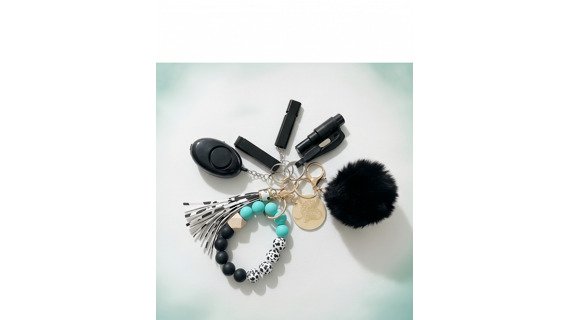
Monthly cleaning routine:
- Mix warm water with a tiny drop of dish soap
- Dip a soft cloth into the soapy water
- Wipe down all metal surfaces gently
- Dry immediately with a clean, dry cloth
- Store in a cool, dry place
Don't use harsh chemicals or abrasive scrubbers. They damage the finish and can wear away protective coatings. Soft cloths and mild soap are all you need.
For stubborn dirt or corrosion, use a soft-bristled toothbrush with the soapy water. Gently scrub around edges and crevices. Rinse with clean water and dry thoroughly.
Check for rust spots. Light surface rust can be removed with a pencil eraser or very fine steel wool (0000 grade only). Rub gently in one direction. If rust has pitted the metal or created deep spots, the tool may be compromised and should be replaced.
Inspect the sharp edges on window breakers and seatbelt cutters. They should still feel sharp to the touch. If they're dull or rounded, the tool won't work effectively in an emergency. Replace it.
If your keychain has a leather or fabric wristlet, clean it separately. Use a damp cloth with mild soap for fabric. For leather, use a leather-specific cleaner or a tiny amount of saddle soap. Dry completely before reattaching to your keys.
Aqua Defense Safety Keychain Set with →
Self-Defense Keychain Laws by State and Legal Compliance
Before you carry any self-defense tool, you need to know what's legal in your state. Laws vary dramatically. Pepper spray is legal in most states but banned in some. Stun devices are restricted in several states. Some states require permits.
This is not negotiable. Carrying an illegal item can result in arrest, fines, and a criminal record. That's worse than not having the tool at all.
Start here:
Visit your state's attorney general website and search for "self-defense laws" or "pepper spray laws." Most states have a page explaining what's legal to carry. Read it carefully.
If you're unclear, contact your local police department's non-emergency line. Ask specifically what self-defense tools are legal in your area. They can give you a straight answer.
Common restrictions:
Some states limit the size of pepper spray canisters. Others ban stun devices entirely. A few states require you to be 18 or older to carry certain tools. Some cities have stricter rules than the state allows, so check both your state and your city.
If you travel frequently, check the laws in every place you go. What's legal in your home state might be illegal where you're visiting. TSA rules also apply at airports. Most self-defense tools are prohibited in carry-on luggage. Check TSA.gov before you travel.
Update your knowledge annually. Laws change. A tool that was legal last year might be restricted this year.
Storage Best Practices to Prevent Accidental Discharge
Accidental discharge happens. A keychain gets jostled in a bag. Something presses the activation button. Suddenly your personal alarm is screaming or your pepper spray is spraying inside your purse.
Proper storage prevents this.
Replacement and Disposal Protocols for Expired Tools
When a tool expires or stops working, you need to replace it and dispose of the old one responsibly.
Pepper spray disposal:
Personal alarm batteries:
Metal tools:
Stun devices:
Ordering replacements:
Conclusion
Maintaining your self-defense keychain tools is simple. Test your alarm every quarter. Check pepper spray expiration dates annually. Clean metal tools monthly. Store everything in a dedicated pouch away from heat and moisture. Replace tools before they fail.
Frequently Asked Questions
How often should I test my personal alarm on my self-defense keychain?
Test your personal safety alarm at least monthly to ensure it's functioning properly. A quick press of the button should produce a loud sound designed to attract attention during an emergency. If the alarm sounds weak or fails to activate, replace the battery or the entire unit. Regular testing prevents disappointment if you ever need it in a real situation.
What's the typical shelf life for pepper spray on a self-defense keychain?
Most pepper spray products have a shelf life of 3 to 4 years from the date of manufacture. Check the expiration date printed on your pepper spray holder and replace it before it expires. Even if not used, the formula degrades over time and loses stopping power. Mark your calendar to replace it annually if you use it frequently, or every 3 years if stored unused.
Are self-defense keychains legal everywhere?
Self-defense keychain legality varies significantly by state and municipality. Pepper spray is restricted or banned in some states, while personal alarms are generally legal nationwide. Before carrying any self-defense tool across state lines, research your destination's laws. Check your state's attorney general website or local law enforcement for current regulations, as laws change frequently.
How do I properly store my self-defense keychain to prevent accidental discharge?
Store your self-defense keychain in a cool, dry place away from direct sunlight and extreme temperatures. Keep it in a designated pocket or pouch where the trigger or activation button won't be accidentally pressed. Store pepper spray holders upright to prevent leaks. Keep all tools away from children and pets. Check storage conditions periodically to ensure no environmental damage has occurred.