

Table of Contents
- Are Safety Keychains Legal in California?
- California Penal Code and Self-Defense Laws
- Prohibited Weapons and Disguised Knives
- What Safety Tools You Can Actually Carry
- Can You Take Safety Keychains on Airplanes?
- Legal Alternatives for Personal Safety
- Reasonable Force and Legal Liability
- Conclusion
- Frequently Asked Questions
Last Updated: September 29, 2026
Are Safety Keychains Legal in California?
Whether safety keychains legal California are permitted depends entirely on what's inside the keychain. California has strict self-defense laws, and what you can legally carry varies based on the specific tool and intent. This guide breaks down what's permissible, prohibited, and what gray areas could create legal trouble.
California doesn't treat all personal safety devices equally. Some items are completely legal to own and carry, others are banned, and some exist in a gray area where possession is legal but use carries serious criminal penalties.
California Penal Code and Self-Defense Laws
California's Penal Code establishes what weapons and tools are legal to possess and when you can use force in self-defense. The state distinguishes between inherent weapons and marketed safety tools, though this distinction doesn't always provide legal protection.
California doesn't simply ask "Is this a weapon?" It asks "What is this object designed to do, and what does the law say about that specific design?"
Personal alarms are legal because they produce sound, not force. Flashlights are legal. But attach certain items to a keychain and you've crossed into restricted territory, the Penal Code targets disguised weapons and prohibited items.
Penal Code Section 692 permits self-defense with reasonable force against imminent threat, but "reasonable" is determined by a jury, not you. Carrying a legal tool doesn't automatically make its use reasonable, context matters enormously.
Prohibited Weapons and Disguised Knives
Penal Code Section 20910 bans "any knife having a blade that is concealed or not readily apparent." This targets belt buckle knives, lipstick knives, and cane swords. A keychain with a concealed blade violates this statute.
California also prohibits brass knuckles, switchblades, automatic knives, and dirks or daggers designed to be carried concealed.
Nunchaku have been legal in California since 2022, but saps, blackjacks, and similar striking devices remain banned under Penal Code Section 22210.
A window breaker marketed as an emergency tool has legal protection, but if an item is specifically designed to cause injury, California law treats it as a weapon regardless of marketing.
What Safety Tools You Can Actually Carry
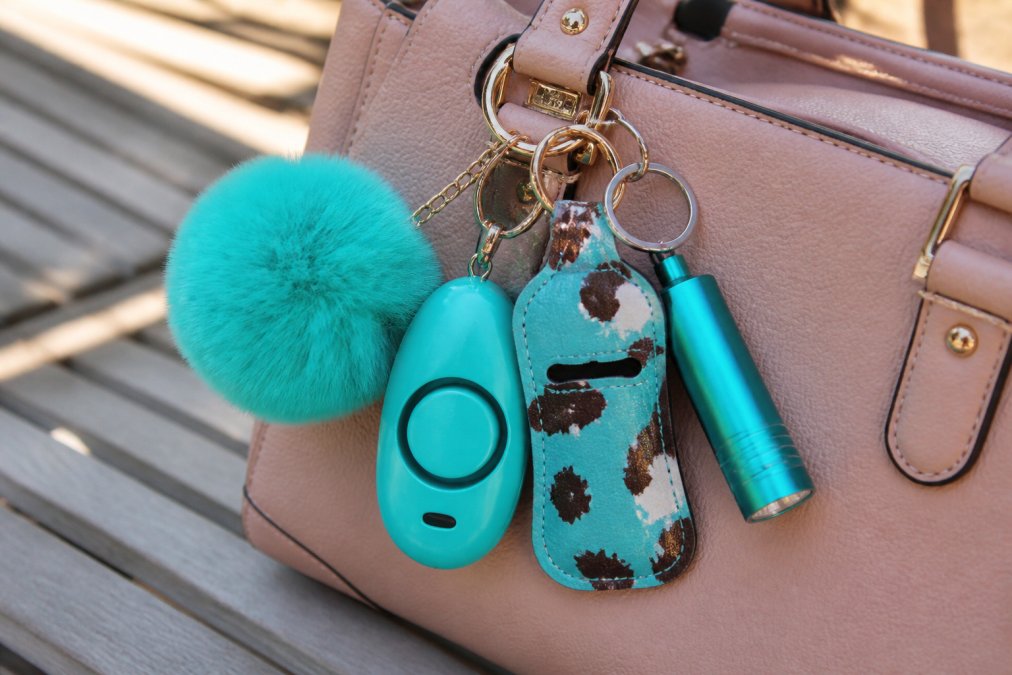
The legal safety tools you can carry on a California keychain are more limited than most people realize, but understanding the specific features that determine legality is critical. California law doesn't ban categories of tools, it bans specific designs and mechanisms. Here's how to evaluate what's actually safe to carry.
Personal Alarms (100% Legal)
Personal alarms are completely legal because they produce sound, not force. A keychain alarm must be a standalone device producing sound when activated, typically 130 decibels or higher. The Defense Divas Keychains Sunflower Defense Keychain Set ($27.99) includes a personal safety alarm.
Flashlights (100% Legal)
Mini flashlights are legal without restriction. A tactical flashlight marketed as a "self-defense tool" with extreme brightness could theoretically be challenged as an improvised weapon. Carry a standard LED mini flashlight for utility purposes to remove ambiguity about intent.
Emergency Window Breakers and Seatbelt Cutters (100% Legal)
Emergency window breakers and seatbelt cutters are legal because they're designed for vehicle emergencies, not to harm people. A window breaker is legal for breaking tempered glass in emergencies, not for striking. Using it as a weapon violates assault and battery statutes. The Aqua Defense Safety Keychain Set with Wallet ($44.99) includes a personal safety alarm and mini flashlight, a legal combination.

Pepper Spray (Legal With Strict Conditions)
Pepper spray is legal to possess under specific conditions: it must be in a self-defense container with a safety mechanism, you must be at least 18 years old, and the canister cannot exceed 2.5 ounces. You can only use it in self-defense against imminent threat of death or serious bodily injury. Using it in other contexts, verbal harassment, non-violent confrontations, can result in assault or battery charges. Possession is legal but use is heavily restricted.
Kubotans and Pressure-Point Tools (Gray Area)
Kubotans occupy a legal gray area in California. They're not explicitly prohibited, but their classification depends on marketing and use. A kubotan marketed as a "self-defense tool" is more legally vulnerable than one marketed as a "keychain accessory." Most legal experts recommend avoiding them unless you have specific training and understand the liability.
What to Avoid
Aqua Defense Safety Keychain Set with →
Do not carry keychain items that obscure their purpose. A decorative item containing a concealed blade violates Penal Code Section 20910. The safest keychains have components with immediately apparent, non-harmful purposes.
The legal safety tools you can carry on a California keychain are personal alarms, flashlights, emergency window breakers, and seatbelt cutters. Pepper spray is legal to possess but carries significant liability in use. Everything else exists in gray areas where use creates criminal exposure.
Can You Take Safety Keychains on Airplanes?
TSA rules often conflict with California law. Personal alarms are generally permitted through security but pack them in checked luggage to be safe. Flashlights are permitted in carry-on. Window breakers and seatbelt cutters are prohibited in carry-on but permitted in checked bags. Pepper spray is prohibited in both carry-on and checked luggage, except one 2% tear gas canister in checked luggage only with a safety mechanism. If flying, reassess your safety keychain for TSA compliance.
Legal Alternatives for Personal Safety
Beyond the tools you can attach to a keychain, California offers several legal personal safety strategies that don't involve prohibited weapons. More importantly, understanding how to interact with law enforcement if you're carrying legal tools can prevent misunderstandings that escalate into criminal charges.
Situational Awareness and De-escalation
Self-defense training focused on situational awareness and de-escalation is more valuable than physical techniques. Recognizing threats, understanding body language, and verbal de-escalation prevent situations where you'd need force. A situation you avoid entirely creates zero legal liability.
Technology-Based Safety
Ride-sharing services with built-in safety features and location-sharing apps provide protection through technology without legal complexity of carrying physical tools.
How to Interact With Law Enforcement if You're Carrying Legal Tools
If stopped by law enforcement while carrying legal tools, disclose them proactively. Say: "I'm carrying a personal safety alarm and flashlight on my keychain. I also have a pepper spray canister, which is legal in California for self-defense." Don't reach for items without permission. Don't argue about legality during the stop, say you prefer to discuss it with an attorney. Understand that legal possession doesn't prevent confiscation; you can retrieve items later through proper channels.
If You Use a Self-Defense Tool
If you ever use a legal tool in self-defense, the interaction with law enforcement becomes critical. Document everything immediately: the threat you faced, the actions you took, the tool you used, and the outcome. Take photographs of any injuries you sustained. Get contact information from any witnesses.
When law enforcement arrives, you have the right to remain silent and the right to an attorney.
Traveling With Others and Routine Variation
Reasonable Force and Legal Liability
California's reasonable force doctrine creates a critical gap between what's legal to carry and what's legal to use. You can legally possess a personal alarm, but using it to harass someone creates legal problems. You can legally carry pepper spray, but deploying it in a non-emergency situation can result in assault charges.
Conclusion
Determining which safety keychains legal California are permitted is a qualified answer: some tools are completely legal, others are prohibited, and still others exist in gray areas where possession is legal but use carries serious consequences. Personal alarms, flashlights, and emergency window breakers are your safest options, they're legal to carry, legal to use in genuine emergencies, and don't create liability concerns.
Frequently Asked Questions
What can I carry for self-defense in California?
In California, you can legally carry personal safety tools like pepper spray, personal alarms, flashlights, and window breakers. However, many self-defense items are restricted or prohibited under California Penal Code. Disguised weapons, brass knuckles, and certain impact devices are illegal. The key distinction is whether an item is classified as a tool or a weapon. Items marketed primarily as safety tools, like the Sunflower Defense Keychain Set with its emergency window breaker and alarm, are generally permitted, but items designed to conceal a weapon are not. Always verify local ordinances, as some municipalities have additional restrictions.
Are safety cat keychains legal in California?
Safety cat keychains, typically small metal or plastic cat-shaped objects with pointed ears, occupy a legal gray area in California. If the item is marketed and used as a self-defense weapon rather than a novelty accessory, it may be classified as brass knuckles or a prohibited impact weapon under California Penal Code Section 21510. The distinction between a tool and a weapon depends on intent and design. If you're considering a cat keychain, prioritize items explicitly marketed as safety accessories with practical features like alarms or flashlights, such as those offered by Defense Divas Keychains, rather than items designed primarily as impact devices.
Can I take safety keychains on airplanes?
TSA regulations prohibit certain safety keychain components from carry-on luggage. Pepper spray, personal alarms that are too loud, and window breakers may be confiscated at security. However, many keychain components, like flashlights, pom poms, and card holders, are permitted. Check the TSA website or contact your airline before traveling. If your keychain set includes restricted items, consider removing them before heading to the airport or packing them in checked baggage if allowed. Defense Divas Keychains recommends reviewing TSA guidelines for your specific set before travel to avoid delays or confiscation.
What's the difference between a tool and a prohibited weapon in California?
California law distinguishes tools from weapons based on design, intent, and primary function. A window breaker marketed as an emergency tool is legal; the same item marketed as a self-defense weapon may be illegal. Disguised weapons, items that conceal a blade or impact device, are prohibited under Penal Code Section 21510. Personal safety keychains that include legitimate tools like flashlights, alarms, and emergency breakers are generally classified as safety accessories rather than weapons. However, items with no practical function other than causing harm are prohibited. When selecting a keychain, choose sets with clear safety purposes and practical features, like the Aqua Defense Safety Keychain Set, which combines stylish design with functional safety tools.
The challenge with personal safety isn't just finding tools, it's understanding the legal boundaries that protect you rather than expose you to liability. Defense Divas Keychains helps you navigate this by offering safety accessories that are unambiguously legal in California while delivering genuine functionality. Explore our collection of stylish, legally-compliant safety keychain sets and find the option that matches your lifestyle and safety priorities.